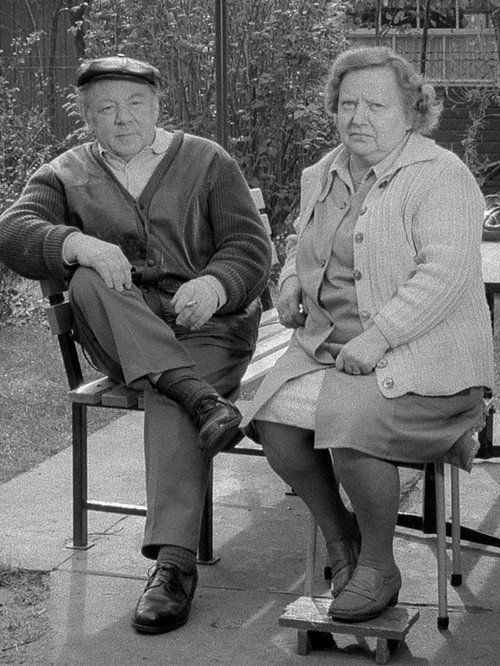
Trompete, Glocke, letzte Briefe 1978
Step into the vivid world of *Trompete, Glocke, letzte Briefe (1978)*, a poignant East German documentary that weaves together personal memory and historical grit.
Director: Peter Kahane
Frequently Asked Questions
What is Trompete, Glocke, letzte Briefe (1978) about?
This East German documentary traces the life of a working-class Berlin family through the early 20th century, focusing on their involvement in the resistance against National Socialism. Through the siblings of executed communist Ernst Knaack, the film explores their childhood in a pub that doubled as a hub for revolutionaries and the unemployed.
Who directed Trompete, Glocke, letzte Briefe?
Peter Kahane directed this documentary. Known for his politically engaged films, Kahane crafts a visually striking portrait of Berlin's proletarian past.
Who stars in Trompete, Glocke, letzte Briefe?
The film features the siblings of Ernst Knaack, whose testimonies anchor the narrative, along with their grandfather, a former sailor and revolutionary.
Is Trompete, Glocke, letzte Briefe (1978) worth watching?
While unrated on IMDb, this documentary's historical significance and emotionally resonant storytelling make it a compelling watch for fans of political cinema and 20th-century European history. Its concise runtime and authentic perspective offer a unique window into Berlin's working-class resistance.
How long is Trompete, Glocke, letzte Briefe?
The film runs for 20 minutes.
About Trompete, Glocke, letzte Briefe (1978) — A Glimpse into Berlin's Proletarian Resistance
Step into the vivid world of *Trompete, Glocke, letzte Briefe (1978)*, a poignant East German documentary that weaves together personal memory and historical grit. Directed by Peter Kahane, this 20-minute film immerses viewers in the raw, working-class streets of 1910s Berlin through the eyes of a communist family. The narrative centers on the siblings of Ernst Knaack, a resistance fighter executed in 1944, who recount their youth in a Prenzlauer Berg pub run by their grandfather—a former sailor turned revolutionary. The film pulses with the energy of the November Revolution and the unyielding spirit of those who resisted fascism, blending intimate family recollections with the broader fight against oppression. Its black-and-white framing and documentary style evoke a gritty, tactile atmosphere, transporting audiences to a Berlin both tender and turbulent.
At its heart, *Trompete, Glocke, letzte Briefe* is a tribute to the unsung heroes of the labor movement and a meditation on memory, loss, and legacy. Kahane's direction delicately balances personal stories with historical weight, celebrating the resilience of ordinary people in extraordinary times. The film's concise runtime packs emotional depth, leaving a lasting impression of courage and camaraderie. For history buffs and documentary enthusiasts alike, this short but powerful film offers a rare glimpse into the lives that shaped resistance against National Socialism.