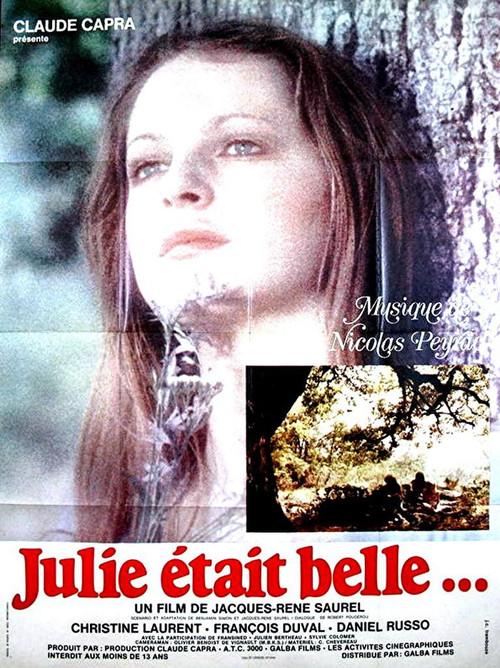
Julie était belle 1977
Jacques-René Saurel's *Julie était belle (1977)* unfolds as a delicate portrait of memory and loss, wrapped in the intimate atmosphere of 1970s French cinema.
Director: Jacques-René Saurel
Frequently Asked Questions
What is *Julie était belle (1977)* about?
This short French film explores the inner life of Julie, a woman whose quiet resilience is tested by memories that refuse to fade. It's a meditative look at beauty, loss, and the small moments that define us.
Who directed *Julie était belle*?
The film was directed by Jacques-René Saurel, a filmmaker known for his sensitive, character-driven storytelling in the French New Wave tradition.
Who stars in *Julie était belle*?
Cast details for *Julie était belle* are not publicly listed, leaving the focus firmly on its atmospheric narrative and emotional depth.
Is *Julie était belle (1977)* worth watching?
While lacking a formal rating, *Julie était belle* earns points for its haunting mood and thoughtful direction. It's a niche pick best suited to fans of slow-burn French cinema rather than mainstream audiences.
How long is *Julie était belle*?
The film runs for 83 minutes, offering a concise but impactful viewing experience.
About Julie était belle (1977) — A Poignant French Drama of Memory and Beauty
Jacques-René Saurel's *Julie était belle (1977)* unfolds as a delicate portrait of memory and loss, wrapped in the intimate atmosphere of 1970s French cinema. Clocking in at just 83 minutes, this short film lingers on fleeting moments—autumn leaves crunching underfoot, quiet café conversations, and the unspoken tension between past and present. The story follows Julie, a woman whose beauty seems both a shield and a burden, as she navigates a world that refuses to let her forget. With its muted color palette and understated performances, the film crafts a bittersweet mood that lingers long after the credits roll.
Though sparse in details, *Julie était belle* resonates through its themes of transience and resilience. Saurel's direction keeps the focus squarely on emotional nuance, avoiding melodrama in favor of raw authenticity. The film's brevity enhances its impact, leaving viewers to ponder Julie's journey long after the screen fades to black. For fans of contemplative French cinema, it's a hidden gem worth discovering.
Whether you're drawn to its evocative title or its promise of a reflective viewing experience, *Julie était belle (1977)* offers a slice of French New Wave sensibility that feels both timeless and distinctly of its era.