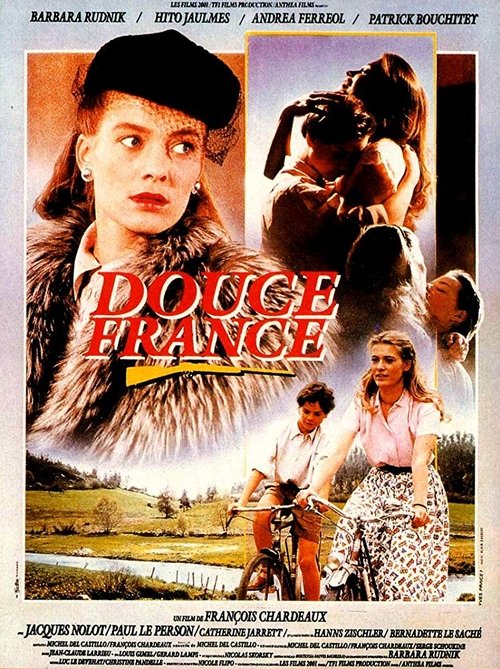
Douce France 1986
Nestled in the heart of Occupied France during World War II, *Douce France (1986)* reveals a haunting truth: the deepest wounds often come from within.
Director: François Chardeaux
Cast






Frequently Asked Questions
What is Douce France (1986) about?
*Douce France (1986)* dives into the lives of a small French village during World War II, where the real struggles aren't just about the occupying forces but the divisions among neighbors. The story follows ordinary people navigating suspicion, sacrifice, and the erosion of trust as war reshapes their lives in unexpected ways.
Who directed Douce France?
François Chardeaux directed *Douce France (1986)*, bringing a nuanced, atmospheric approach to this wartime drama.
Who stars in Douce France?
The film features standout performances from Barbara Rudnik, Andréa Ferréol, Hanns Zischler, Patrick Bouchitey, and Jacques Nolot.
Is Douce France (1986) worth watching?
For viewers who appreciate thought-provoking dramas with historical depth, *Douce France (1986)* is a compelling pick. While it may lack high-stakes action, its focus on moral complexity and strong performances makes it a memorable exploration of wartime France. Fans of character-driven narratives will find much to reflect on here.
How long is Douce France?
*Douce France (1986)* runs for 90 minutes.
About Douce France (1986) — A WWII Drama of Betrayal and Survival in Rural France
Nestled in the heart of Occupied France during World War II, *Douce France (1986)* reveals a haunting truth: the deepest wounds often come from within. Director François Chardeaux crafts a poignant drama that challenges the romanticized narratives of resistance and collaboration, exposing the quiet tragedies of ordinary villagers caught in the crossfire. Through a melancholic lens, the film explores betrayal, survival, and the fragile bonds that tether communities together when faced with the unthinkable. With a moody, introspective tone, it lingers on the moral ambiguities of war, where the enemy isn't always a uniformed soldier but sometimes your neighbor. Barbara Rudnik and Andréa Ferréol deliver powerhouse performances, grounding this historical narrative in raw, emotional realism.
Chardeaux's storytelling weaves together romance and despair, painting a portrait of a France where the sweetness of home is soured by hardship and heartbreak. The film's restrained aesthetic amplifies its themes, making *Douce France (1986)* a standout for fans of period dramas that prioritize psychological depth over action. As tensions rise and loyalties are tested, the village becomes a microcosm of the broader struggle—where every choice carries weight, and no one remains untouched.