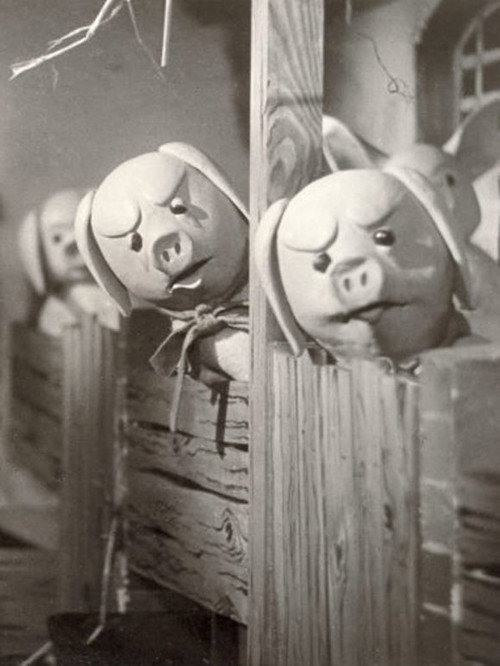
Krawall im Stall 1961
In the quiet East German village of Walter Später's 1961 animated propaganda short *Krawall im Stall*, the peaceful night is shattered by an unexpected arrival.
Director: Walter Später
Frequently Asked Questions
What is Krawall im Stall (1961) about?
This six-minute East German animated short follows Flora the Cow and Jolanthe the Pig as they arrive in a quiet village, where the residents of the pigsty are fed up with their living conditions. The animals team up to demand cleaner, more sociable accommodations, leading to a dramatic overhaul of their barn.
Who directed Krawall im Stall?
Walter Später directed *Krawall im Stall*, bringing a distinctive animated style to this propaganda short rooted in East German ideals.
Who stars in Krawall im Stall?
The film centers on Flora the Cow and Jolanthe the Pig, whose arrival sparks the story's pivotal events.
Is Krawall im Stall (1961) worth watching?
With its unique blend of animation and propaganda, *Krawall im Stall* offers a fascinating glimpse into mid-20th-century East German culture. While its runtime is brief, the film's bold themes and historical context make it a compelling watch for animation and history enthusiasts alike.
How long is Krawall im Stall?
The runtime for *Krawall im Stall* is six minutes.
About Krawall im Stall (1961) — A Six-Minute Animated Rebellion in East Germany
In the quiet East German village of Walter Später's 1961 animated propaganda short *Krawall im Stall*, the peaceful night is shattered by an unexpected arrival. Flora the Cow and Jolanthe the Pig roll into town aboard a rattling truck, their journey sparking curiosity among the slumbering animals. The atmosphere is tense as the residents of the pigsty voice their discontent—overcrowded pens, unsanitary conditions, and a lack of shared resources have left them restless. Inspired by Flora and Jolanthe's visit, the animals band together to demand change. What begins as a murmur of dissatisfaction quickly erupts into a full-blown rebellion, as the entire barn is torn down in favor of a collective, self-sustaining future. This six-minute animated fable blends humor and social commentary, offering a glimpse into East German ideals through the lens of animal protagonists.
The film's charm lies in its simplicity and bold visuals, which disguise its underlying propaganda with a lighthearted story. Walter Später's direction infuses the animation with a playful yet pointed energy, as the animals' grievances mirror real-world calls for industrial and agricultural reform. With its stark black-and-white aesthetic and rhythmic storytelling, *Krawall im Stall (1961)* stands as a unique artifact of its time—a tiny but mighty testament to the power of collective action.