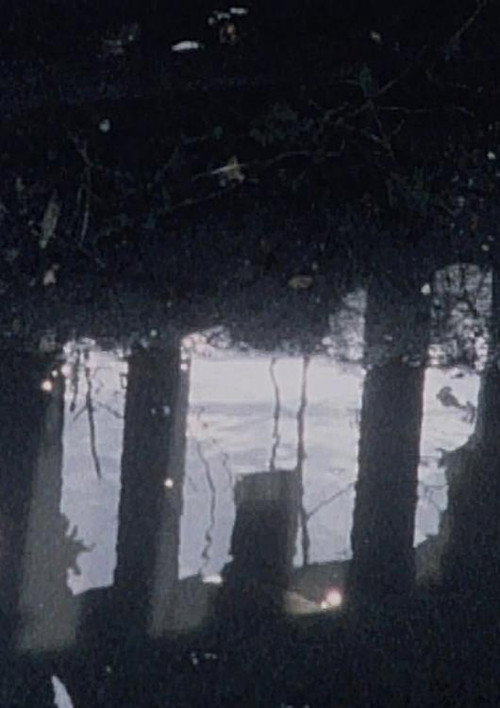
Hole 1992
Hole (1992), directed by Nicky Hamlyn, is a brief yet visually compelling experimental short that transforms an ordinary construction site excavation into a study of light, scale, and perspective.
Director: Nicky Hamlyn
Frequently Asked Questions
What is Hole (1992) about?
Hole (1992) explores an ordinary construction site excavation viewed through a static camera focused on a single hole. Over two minutes, it captures the subtle differences in movement and presence between humans and animals passing through the frame, turning a simple hole into a lens for observing scale and light.
Who directed Hole?
Hole was directed by Nicky Hamlyn, a filmmaker known for experimental and avant-garde short films that emphasize visual composition and atmospheric storytelling.
Who stars in Hole?
Cast details for Hole (1992) are not publicly available.
Is Hole (1992) worth watching?
As a two-minute experimental short with no plot or dialogue, Hole (1992) may appeal most to fans of avant-garde cinema and visual storytelling. Its meditative focus on light and scale offers a quiet, reflective experience rather than entertainment.
How long is Hole?
Hole (1992) runs for 2 minutes.
About Hole (1992) — A Minimalist Short Film on Light, Scale and Observation
Hole (1992), directed by Nicky Hamlyn, is a brief yet visually compelling experimental short that transforms an ordinary construction site excavation into a study of light, scale, and perspective. Through carefully composed static shots, the film contrasts the casual movements of humans and cats as they pass through a simple hole in the ground, revealing unexpected contrasts in size and motion. The minimalist approach strips away narrative, leaving only the play of shadows, reflections, and the interplay between the familiar and the abstract.
Shot in stark black-and-white, Hole (1992) transforms a mundane urban feature into a meditative experience, where every glance through the aperture becomes a small revelation. Hamlyn's use of conventional framing and unchanging camera placement turns a fleeting moment into a meditation on observation itself—what we notice, what we overlook, and how scale shapes our perception of the everyday world.