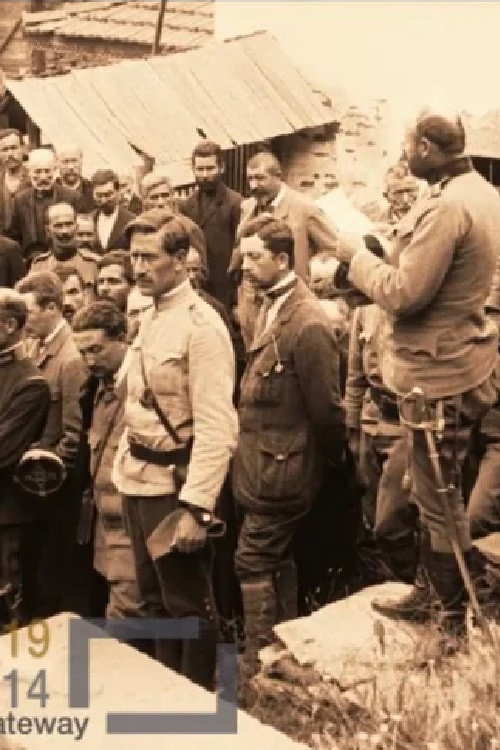
Funeral of Second Lieutenant Živojin Marinković 1913
Captured in stark black-and-white, *Funeral of Second Lieutenant Živojin Marinković (1913)* preserves a fleeting moment from history when the camera lens outpaced the passage of time.
Director: Đorđe Bogdanović
Frequently Asked Questions
What is *Funeral of Second Lieutenant Živojin Marinković (1913)* about?
This short documentary records the burial of Second Lieutenant Živojin Marinković, a Serbian officer killed during the Second Balkan War. Filmed in Kriva Palanka on July 7, 1913, it captures the procession, church service, and interment, offering a rare glimpse into early 20th-century wartime mourning rituals.
Who directed *Funeral of Second Lieutenant Živojin Marinković*?
The film was directed by Đorđe Bogdanović, a pioneering figure whose work laid the foundation for Serbian documentary cinema.
Who stars in *Funeral of Second Lieutenant Živojin Marinković*?
The cast is not officially recorded, though the documentary features Second Lieutenant Živojin Marinković as the central figure and local villagers and clergy participating in the rites.
Is *Funeral of Second Lieutenant Živojin Marinković (1913)* worth watching?
While lacking modern cinematic polish, the film is historically invaluable as one of the earliest Balkan war documentaries. Its raw immediacy offers a moving glimpse into early 20th-century wartime culture and sacrifice, making it essential viewing for history buffs and film enthusiasts alike.
How long is *Funeral of Second Lieutenant Živojin Marinković*?
The documentary runs for 5 minutes, capturing a fleeting but profound slice of early 20th-century Balkan history.
About Funeral of Second Lieutenant Živojin Marinković (1913) — Serbia's Earliest War Documentary
Captured in stark black-and-white, *Funeral of Second Lieutenant Živojin Marinković (1913)* preserves a fleeting moment from history when the camera lens outpaced the passage of time. Directed by pioneering filmmaker Đorđe Bogdanović, this five-minute documentary documents the solemn tribute paid to a fallen officer whose life ended on the battlefields of Kiselica. Framed by the hushed solemnity of Saint Demetrius Church in Kriva Palanka, the footage follows the coffin's procession, the murmured prayers of mourning villagers, and the final interment on the earth that swallowed both his sacrifice and the fragile optimism of a young nation. Shot in 1913, it stands as one of the earliest visual records of Balkan wartime remembrance, blending raw historical testimony with the quiet poetry of collective grief.
This early cinematic artifact offers more than mere documentation; it is a visual epitaph to heroism born in the crucible of the Second Balkan War. Through Bogdanović's lens, Second Lieutenant Živojin Marinković's final journey becomes a timeless meditation on duty, memory, and the cost of war—a theme that resonates through decades of Balkan cinema and beyond. Though stripped of modern sentimentality, the footage pulses with the unspoken weight of a community united in sorrow, making it a poignant artifact for historians and cineastes alike who seek to understand the roots of national identity through the unblinking eye of early filmmaking.