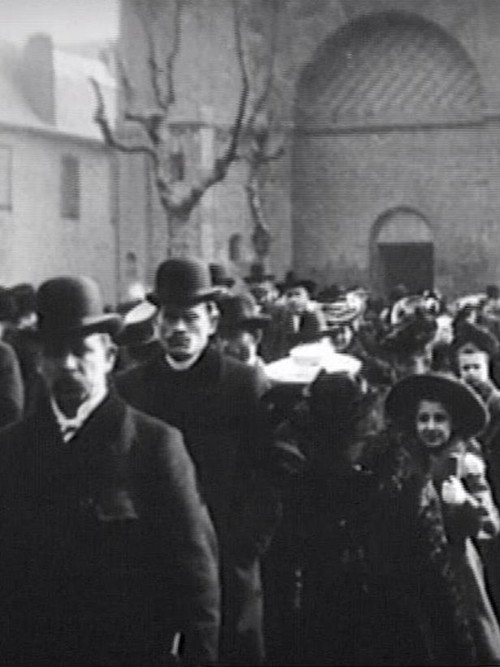
Domausgang in Trier 1904
Step back in time with *Domausgang in Trier (1904)*, a rare silent documentary capturing an ordinary moment at the Trier Cathedral in early 20th-century Germany.
Director: Peter Marzen
Frequently Asked Questions
What is *Domausgang in Trier* (1904) about?
This short silent documentary captures the peaceful exit of people from the Trier Cathedral in 1904. Directed by Peter Marzen, the film serves as a historical time capsule, showcasing everyday life around the landmark during the early 1900s.
Who directed *Domausgang in Trier*?
The film was directed by Peter Marzen, a pioneer in early cinema whose work contributed to documenting historical moments through film.
Who stars in *Domausgang in Trier*?
Cast details for this 1904 film are not available, as credit information from this era was often omitted or lost over time.
Is *Domausgang in Trier* (1904) worth watching?
While it's not a narrative-driven film, *Domausgang in Trier* offers historical value as one of the earliest surviving films shot in Trier. Its 2-minute runtime makes it a quick but meaningful watch for fans of silent cinema or German history.
How long is *Domausgang in Trier*?
The film runs for just 2 minutes, capturing a single, fleeting moment in time.
About Domausgang in Trier (1904) — The Oldest Film of Trier Cathedral's Exit
Step back in time with *Domausgang in Trier (1904)*, a rare silent documentary capturing an ordinary moment at the Trier Cathedral in early 20th-century Germany. Directed by Peter Marzen, this fleeting 2-minute film offers a glimpse into the past, documenting daily life near one of the city's most iconic landmarks. The black-and-white footage exudes a quiet charm, transporting viewers to an era when cinema was still in its infancy and every frame felt like a small miracle. Though modest in scale, the film preserves a slice of history that might otherwise have faded away, making it a fascinating artifact for history buffs and film enthusiasts alike.
As a silent-era documentary, *Domausgang in Trier* stands out for its simplicity and authenticity. The film's brevity belies its significance, offering a raw, unfiltered snapshot of Trier in 1904. While the cast remains unknown, the focus isn't on individuals but on the atmosphere of the moment—a serene, almost timeless scene that invites reflection on how much (and how little) the world has changed in over a century. For those curious about early filmmaking or German history, this tiny but treasured clip is a must-see.