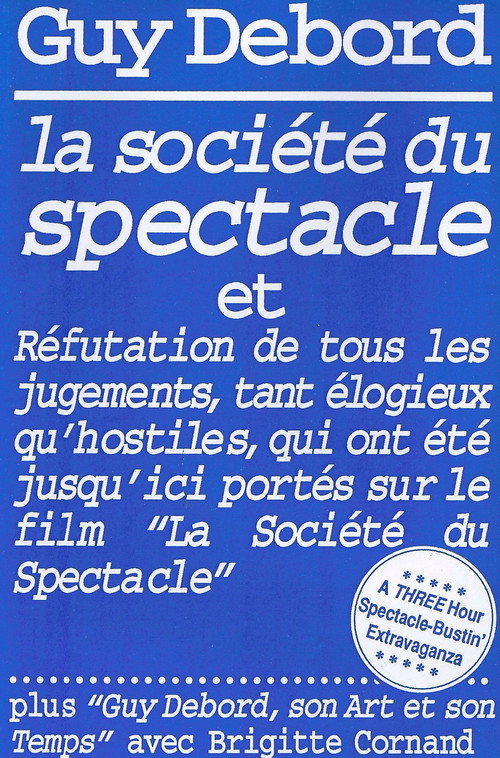
Guy Debord, son art et son temps 1995
Dive into *Guy Debord, son art et son temps (1995)*, Brigitte Cornand's striking documentary that confronts the decay of modern society through the lens of Guy Debord's unflinching critique.
Director: Brigitte Cornand
Frequently Asked Questions
What is *Guy Debord, son art et son temps (1995)* about?
This documentary explores Guy Debord's final work, a scathing indictment of modern society through a collage of television clips and archival footage. It reflects Debord's lifelong critique of spectacle, alienation, and the degradation of culture, framed by his own declining health.
Who directed *Guy Debord, son art et son temps*?
Brigitte Cornand directed this documentary, capturing Debord's final artistic and ideological confrontation with society.
Who stars in *Guy Debord, son art et son temps*?
Director Brigitte Cornand leads the film, while Guy Debord appears through archival footage and reflections. Cast details beyond this are not listed.
Is *Guy Debord, son art et son temps (1995)* worth watching?
As a documentary, it offers a unique glimpse into Debord's legacy and his uncompromising vision. While not as polished as his earlier works, its raw intensity and historical significance make it compelling for fans of avant-garde cinema and critical theory.
How long is *Guy Debord, son art et son temps*?
The runtime is 60 minutes.
About Guy Debord, son art et son temps (1995) — Brigitte Cornand's Unfiltered Critique of Society
Dive into *Guy Debord, son art et son temps (1995)*, Brigitte Cornand's striking documentary that confronts the decay of modern society through the lens of Guy Debord's unflinching critique. While the film opens with fleeting glimpses of Debord's art, its core unfolds as a montage of television clips exposing the absurdity and corruption of contemporary culture. Filmed during Debord's final illness, this raw and impassioned work serves as his parting salvo—a visceral, unfiltered denunciation of the world he despised. Though it lacks the subtlety of his earlier films, Cornand's documentary captures the urgency and fury of a man whose vision remained unbroken until the end.
Set against a backdrop of societal breakdown, the film weaves together archival footage and Debord's own reflections to create a haunting meditation on alienation, spectacle, and the erosion of authenticity. The atmosphere is electric yet melancholic, blending biting satire with a sense of inevitability as Debord's final critique takes shape.