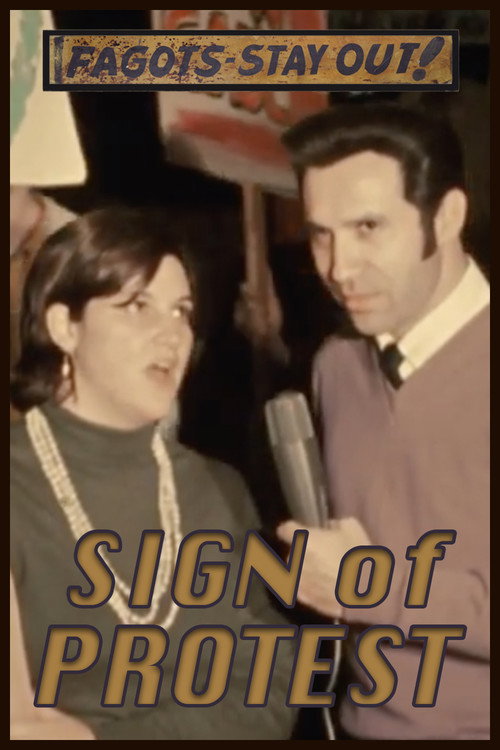
Sign of Protest 1970
Pat Rocco's *Sign of Protest (1970)* captures a pivotal moment in LGBTQ+ history through a raw, twenty-minute documentary that documents a fierce battle against intolerance.
Director: Pat Rocco
Frequently Asked Questions
What is Sign of Protest (1970) about?
*Sign of Protest* documents the protests sparked by a homophobic sign at Barney's Beanery, a bar in West Hollywood. The film highlights the LGBTQ+ community's resistance against institutionalized discrimination, capturing the anger and activism that defined the era. It's a snapshot of grassroots courage against systemic bigotry.
Who directed Sign of Protest?
The film was directed by Pat Rocco, a pioneering LGBTQ+ filmmaker and activist whose work centered on visibility and social justice during a transformative period.
Who stars in Sign of Protest?
The documentary features interviews and footage of LGBTQ+ activists and patrons of Barney's Beanery, though specific cast names are not listed.
Is Sign of Protest (1970) worth watching?
While unrated on IMDb, *Sign of Protest* is a historically significant short documentary that offers a glimpse into early LGBTQ+ activism. Its brevity and urgency make it a compelling watch for fans of social justice films, though it's best understood in its historical context.
How long is Sign of Protest?
The film runs for 20 minutes, a concise yet impactful runtime that amplifies its message.
About Sign of Protest (1970) — The 1970s documentary that sparked a community's fight for dignity
Pat Rocco's *Sign of Protest (1970)* captures a pivotal moment in LGBTQ+ history through a raw, twenty-minute documentary that documents a fierce battle against intolerance. The film centers on the controversial homophobic sign that loomed behind the bar of Barney's Beanery in West Hollywood, a place where LGBTQ+ patrons were routinely targeted. Rocco's lens turns the lens on the community's defiant response, blending archival footage with stirring interviews to expose the everyday activism that challenged systemic discrimination. With a gritty, vérité style, the documentary immerses viewers in the tension and resilience of an era when visibility meant resistance.
As a snapshot of grassroots protest, *Sign of Protest* transcends its brief runtime, offering a window into the struggles and solidarity that shaped the LGBTQ+ movement. The atmosphere crackles with urgency, reflecting the anger and hope of those who refused to accept second-class citizenship. Rocco's work remains a vital document, reminding us how small acts of defiance can ripple into lasting change.