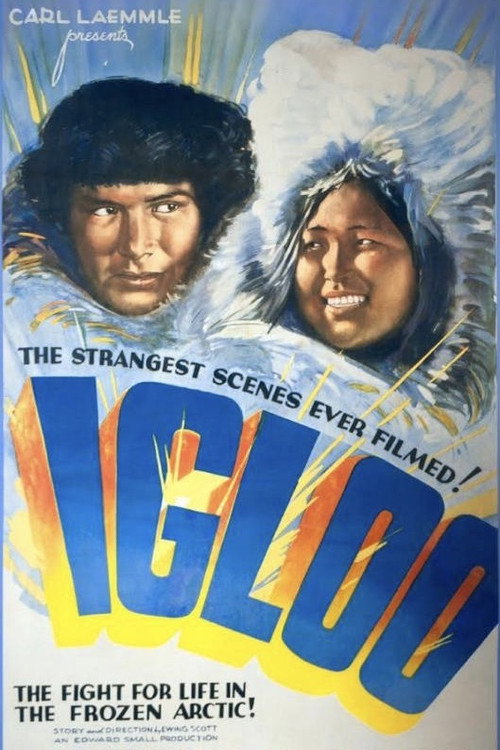
Igloo 1932
"A fight for life in the frozen Arctic!"
Step into the frozen wilderness with *Igloo (1932)*, a gripping documentary that immerses viewers in the harsh realities of life among Alaskan Natives.
Director: Ewing Scott
Cast

Frequently Asked Questions
What is Igloo (1932) about?
*Igloo (1932)* is a documentary that sheds light on the daily lives and hardships faced by Alaskan Natives in the Arctic. The film documents their cultural practices, survival strategies, and the relentless challenges posed by the frozen landscape. It's a tribute to their resilience and an early cinematic effort to preserve their way of life.
Who directed Igloo?
*Igloo (1932)* was directed by Ewing Scott, an American filmmaker known for his work in early documentary and exploration films.
Who stars in Igloo?
The documentary features Gayne Whitman alongside Indigenous performers including Mala, Kyatuk, Toyuk, Lanak, and Nahshook.
Is Igloo (1932) worth watching?
While *Igloo (1932)* is a historical curiosity rather than a modern masterpiece, its cultural significance and unique perspective on Arctic life make it intriguing for fans of early documentary filmmaking or anthropology. Its authenticity and stark portrayal of survival are its strongest assets.
How long is Igloo?
*Igloo (1932)* has a runtime of 70 minutes.
About Igloo (1932) — A Glimpse into Arctic Survival Through Early Documentary Filmmaking
Step into the frozen wilderness with *Igloo (1932)*, a gripping documentary that immerses viewers in the harsh realities of life among Alaskan Natives. Directed by Ewing Scott, this 70-minute film pulls back the curtain on the resilience and traditions of communities battling the Arctic's unforgiving climate. Through striking visuals and authentic storytelling, *Igloo (1932)* captures the essence of survival, cultural heritage, and the unyielding spirit of those who call the ice home. The documentary's stark atmosphere and raw honesty transport audiences to a world where every day is a fight against the elements.
Premiering in the early 1930s, *Igloo (1932)* stands as a testament to early documentary filmmaking, offering a rare glimpse into a way of life few outsiders ever witnessed. Starring Gayne Whitman and Indigenous actors including Mala, Kyatuk, and Toyuk, the film blends observational footage with dramatic tension, underscoring the daily struggles and triumphs of its subjects. For history buffs, anthropology enthusiasts, or anyone fascinated by human endurance, this documentary is a compelling exploration of resilience against nature's most extreme conditions.