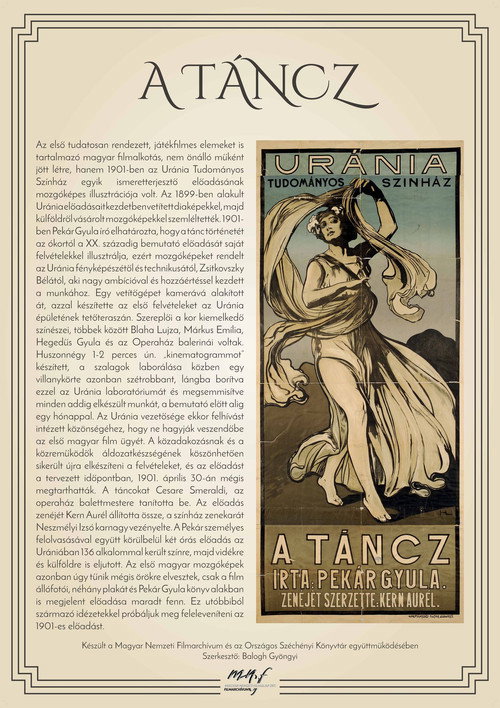
The Dance 1901
Step back in time to 1901 with *The Dance*, a fleeting but monumental silent film hailed as Hungary's very first motion picture.
Director: Béla Zsitkovszky
Frequently Asked Questions
What is The Dance (1901) about?
*The Dance* (1901) is a brief silent film capturing a single dance sequence, marking Hungary's first foray into motion pictures. Its simplicity belies its historical importance, as it represents the dawn of Hungarian cinema rather than a complex narrative.
Who directed The Dance?
The film was directed by Béla Zsitkovszky, a pioneer whose work helped shape early Hungarian filmmaking.
Who stars in The Dance?
The main cast is currently unknown, as historical records from 1901 offer no names or credited performers for this pioneering short.
Is The Dance (1901) worth watching?
While *The Dance* is long lost and unrated, its cultural significance as Hungary's first film makes it a fascinating piece of cinema history. For modern viewers, it's less about entertainment and more about appreciating the humble beginnings of film as an art form.
How long is The Dance?
The runtime of *The Dance* is approximately 2 minutes.
About The Dance (1901) — The First Hungarian Film Ever Made
Step back in time to 1901 with *The Dance*, a fleeting but monumental silent film hailed as Hungary's very first motion picture. Directed by Béla Zsitkovszky, this two-minute gem captures an era when cinema was still finding its rhythm—simple in form yet rich in historical significance. While its plot remains shrouded in mystery (and the film itself is considered lost), *The Dance* is celebrated not for its narrative but for its pioneering role in European filmmaking. Imagine the hushed excitement of an audience watching flickering images on a screen for the first time, where even a brief dance sequence became a cultural milestone.
Though details about cast and genre are absent, the 1901 short film embodies the fragile magic of early cinema: a snapshot of artistic ambition distilled into mere minutes. Its legacy lies in what it represents—a moment when motion pictures transitioned from novelty to art, inspiring generations of filmmakers. For historians and cinephiles, *The Dance* isn't just a film; it's a time capsule of innovation, a testament to the enduring power of storytelling through film, no matter how fleeting.