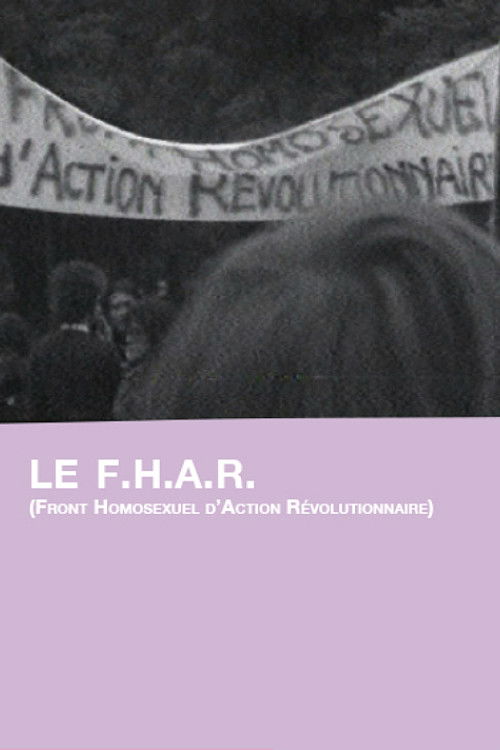
F.H.A.R. 1971
F.H.A.R. (1971), a groundbreaking 27-minute documentary by Carole Roussopoulos, captures the raw energy of the Homosexual Revolutionary Action Front's historic 1971 demonstration at the University of Vincennes.
Director: Carole Roussopoulos
Cast
Frequently Asked Questions
What is F.H.A.R. (1971) about?
F.H.A.R. (1971) documents a pivotal demonstration by the Homosexual Revolutionary Action Front at the University of Vincennes, where activists like Guy Hocquenghem and Anne-Marie Fauret openly challenge societal prejudices. The film captures their unapologetic stance against oppression and their call for a radical shift in how desire and identity are perceived.
Who directed F.H.A.R.?
F.H.A.R. (1971) was directed by Carole Roussopoulos, a trailblazer in feminist and queer filmmaking who brought bold narratives to the screen with unwavering authenticity.
Who stars in F.H.A.R.?
The documentary features Guy Hocquenghem and Anne-Marie Fauret, key figures in the movement, as well as other activists who played pivotal roles in the Homosexual Revolutionary Action Front's fight for liberation.
Is F.H.A.R. (1971) worth watching?
As a 27-minute documentary, F.H.A.R. (1971) offers a rare glimpse into the early days of queer activism, making it essential viewing for history and social justice enthusiasts. Its raw intensity and historical significance outweigh its short runtime, though it's best appreciated in the context of its era.
How long is F.H.A.R.?
F.H.A.R. (1971) runs for 27 minutes.
About F.H.A.R. (1971) — Carole Roussopoulos' Documentary of Queer Liberation
F.H.A.R. (1971), a groundbreaking 27-minute documentary by Carole Roussopoulos, captures the raw energy of the Homosexual Revolutionary Action Front's historic 1971 demonstration at the University of Vincennes. This vivid snapshot of queer activism follows pioneers like Guy Hocquenghem and Anne-Marie Fauret as they challenge societal norms and demand liberation from oppression. The film pulses with defiance and hope, as the collective refuses to remain silent, sparking conversations about identity, desire, and the power of collective action.
Against the backdrop of a cultural revolution, Roussopoulos' lens documents a movement on the brink of change, where voices once muted now roar with urgency. The documentary doesn't just recount history—it immerses viewers in the fiery spirit of a generation ready to dismantle prejudice. F.H.A.R. (1971) remains a vital testament to the fight for acceptance and the unyielding pursuit of freedom.