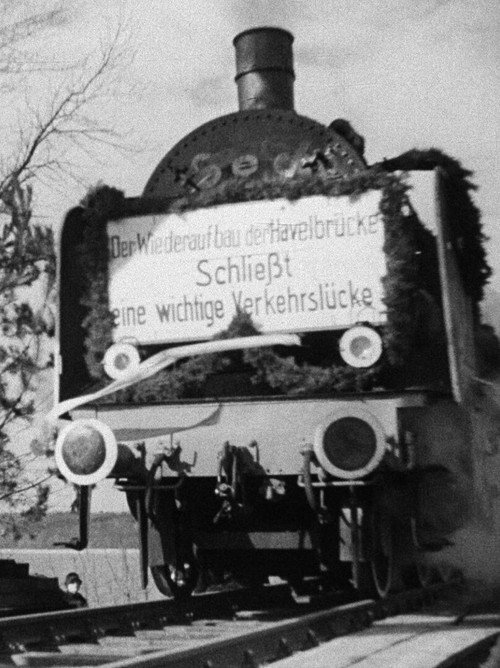
The Bridge of Caputh 1949
Step back into post-war Germany with *The Bridge of Caputh (1949)*, Eva Fritzsche's compelling short documentary.
Director: Eva Fritzsche
Frequently Asked Questions
What is The Bridge of Caputh (1949) about?
*The Bridge of Caputh* follows a group of apprentices and young workers in post-war Germany who take on an impossible task: reconstructing a railway bridge destroyed during the war. Despite official obstacles and limited resources in the Soviet zone, they push forward to complete the project on schedule, symbolizing hope and determination in a divided nation.
Who directed The Bridge of Caputh?
Eva Fritzsche directed *The Bridge of Caputh*. A skilled filmmaker known for her work in documentary and drama, Fritzsche crafts a visually compelling narrative that grounds this historical moment in authenticity.
Who stars in The Bridge of Caputh?
Cast details for *The Bridge of Caputh* are not specified in available records, reflecting its documentary style rooted in real-life events rather than a traditional cast.
Is The Bridge of Caputh (1949) worth watching?
With its historical significance and tight 15-minute runtime, *The Bridge of Caputh* offers a unique window into post-war reconstruction. While it may not have modern production values, its themes of resilience and collective effort make it a compelling watch for history and documentary enthusiasts.
How long is The Bridge of Caputh?
The film runs for 15 minutes, delivering a concise yet impactful portrait of a pivotal moment in history.
About The Bridge of Caputh (1949) — A Post-War Triumph Captured in 15 Minutes
Step back into post-war Germany with *The Bridge of Caputh (1949)*, Eva Fritzsche's compelling short documentary. This 15-minute drama chronicles a remarkable real-life effort: apprentices and young workers defy bureaucratic roadblocks to rebuild a critical railway bridge in the Soviet zone, restoring a vital connection against all odds. The film captures the grit and determination of a generation rebuilding not just infrastructure, but hope itself.
Against a backdrop of scarcity and division, the documentary unfolds with a raw, documentary-style authenticity. Fritzsche's lens focuses on the collective spirit of laborers working tirelessly to meet deadlines, highlighting themes of resilience, community, and the power of collective action. Though modest in length, *The Bridge of Caputh* delivers a poignant snapshot of post-war recovery, offering viewers a glimpse into history through the eyes of those who lived it.