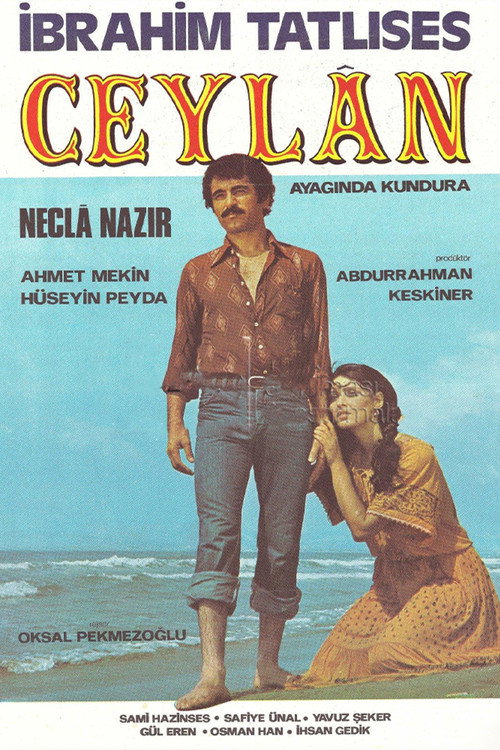
Ceylan 1978
Set against the sun-scorched landscapes of rural Turkey in the late 1970s, Ceylan (1978) is a poignant drama of love and loss directed by Oksal Pekmezoğlu.
Director: Oksal Pekmezoğlu
Cast







Frequently Asked Questions
What is Ceylan (1978) about?
Ceylan tells the story of two lovers, Ibrahim and Ceylan, whose relationship is torn apart by class differences and a cruel twist of fate. After eloping, Ibrahim's absence due to work leads to a devastating misunderstanding, leaving Ceylan to grapple with grief and a life-altering revelation.
Who directed Ceylan?
Ceylan was directed by Oksal Pekmezoğlu, a filmmaker known for his emotionally charged storytelling and visually rich dramas.
Who stars in Ceylan?
The film stars Turkish legends Ibrahim Tatlises as Ibrahim and Necla Nazır as Ceylan, alongside Ahmet Mekin and Hüseyin Peyda in pivotal roles.
Is Ceylan (1978) worth watching?
While Ceylan lacks an IMDb rating, its dramatic depth and classic Turkish romance make it a compelling watch for fans of the genre. The film's emotional resonance and strong performances offer a rewarding experience, though modern viewers may find its pacing slow.
How long is Ceylan?
Runtime details are not listed for Ceylan (1978).
About Ceylan (1978) — A Classic Turkish Romance Mired in Tragedy and Love
Set against the sun-scorched landscapes of rural Turkey in the late 1970s, Ceylan (1978) is a poignant drama of love and loss directed by Oksal Pekmezoğlu. The film follows Ibrahim, a humble truck driver, and Ceylan, the spirited daughter of a powerful landowner who forbids their union. Their forbidden romance leads to a daring elopement, but fate intervenes when Ibrahim accepts a lucrative job transporting goods to Syria. A tragic misunderstanding sends Ceylan reeling—she believes her beloved has perished in a crash and returns to her father's estate, only to face a cruel twist of destiny. With rich emotional depth and striking visuals, this classic Turkish drama explores the fragility of love against the backdrop of class divides and societal expectations.
The atmosphere is steeped in melancholy and nostalgia, as the film captures the raw intensity of first love and the heartbreak of separation. Pekmezoğlu crafts a narrative that lingers on themes of duty, sacrifice, and the cruel hand of misfortune, delivering a story that resonates with timeless emotional weight. Ideal for fans of classic romantic dramas, Ceylan (1978) remains a standout in Turkish cinema, offering a blend of romance and tragedy that continues to captivate audiences decades later.