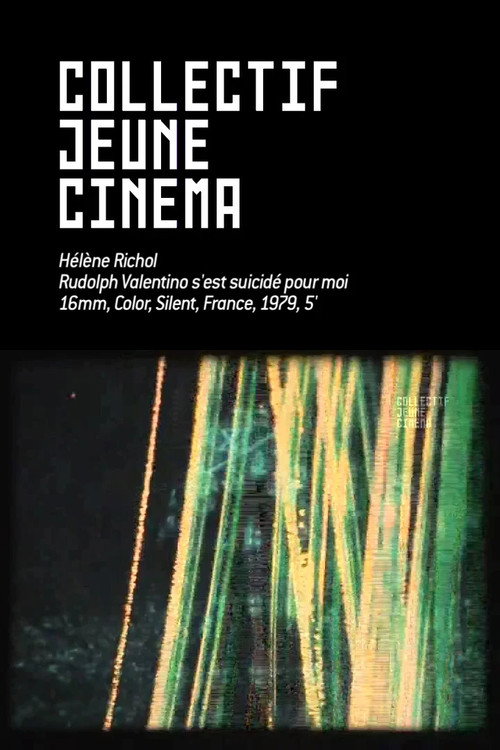
Rudolph Valentino s’est suicidé pour moi 1979
Rudolph Valentino s'est suicidé pour moi (1979) is a hypnotic, avant-garde short film that blends surreal visuals with a fractured soundscape, offering a fresh take on the enigmatic legend of Rudolph Valentino.
Director: Hélène Richol
Frequently Asked Questions
What is Rudolph Valentino s'est suicidé pour moi (1979) about?
This short film explores the myth and mystery surrounding Rudolph Valentino through surreal visuals and anachronistic sound. Hélène Richol crafts a fragmented narrative that blends historical text with experimental imagery, creating a haunting meditation on legacy and loss. The film's disjointed rhythms mirror the elusive nature of its subject.
Who directed Rudolph Valentino s'est suicidé pour moi?
The film was directed by Hélène Richol, a visionary behind this experimental short. Her bold use of geometric visuals and anachronistic scoring pushes the boundaries of conventional storytelling.
Who stars in Rudolph Valentino s'est suicidé pour moi?
Cast information for this 1979 experimental short isn't publicly documented.
Is Rudolph Valentino s'est suicidé pour moi (1979) worth watching?
With its high-concept approach and niche appeal, this film is best suited for fans of experimental cinema. While its runtime is brief, its stylistic boldness and thematic depth make it a compelling watch for those curious about avant-garde filmmaking. It's not for everyone, but it's a memorable experience.
How long is Rudolph Valentino s'est suicidé pour moi?
The film runs for 5 minutes.
About Rudolph Valentino s'est suicidé pour moi (1979) — Experimental Short Film Exploring Myth and Memory
Rudolph Valentino s'est suicidé pour moi (1979) is a hypnotic, avant-garde short film that blends surreal visuals with a fractured soundscape, offering a fresh take on the enigmatic legend of Rudolph Valentino. Hélène Richol directs this five-minute experimental piece, where oblique angles dominate geometrically treated images, and film scraps are woven into the chiselled frames like hidden whispers. A 17th-century musical score plays against a voiceover reciting a detached, almost clinical text about Valentino's tragic suicide—creating an eerie anachronism that challenges perception and invites viewers into a dreamlike meditation on memory and myth.
The film's rapid rhythms and intentional distortions evoke a sense of disorientation, mirroring the fragmented legacy of its iconic subject. Richol's bold stylistic choices transform what could have been a straightforward homage into a fragmented, haunting experience—one that lingers long after the credits roll. This is a work of art that defies easy categorization, blending historical intrigue with the raw energy of experimental cinema.
It's a fascinating glimpse into 1970s avant-garde filmmaking, where every frame feels meticulously curated yet deliberately unsettling.