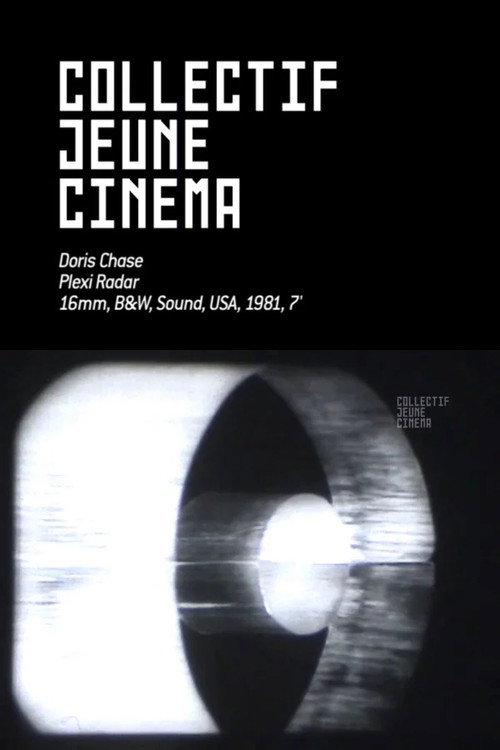
Plexi Radar 1981
Doris Chase's avant-garde short film *Plexi Radar* (1981) turns a hypnotic dance of light into pure cinematic poetry.
Director: Doris Chase
Frequently Asked Questions
What is *Plexi Radar* (1981) about?
*Plexi Radar* immerses viewers in a hypnotic loop of a gyrating plexiglas sculpture, digitally fractured and reassembled to create an illusion of endless change. The film blurs the line between stillness and motion, inviting the audience into a meditative state where frames continuously dissolve and reform.
Who directed *Plexi Radar*?
The film was directed by Doris Chase, a pioneering artist known for her innovative work in film and video art during the late 20th century.
Who stars in *Plexi Radar*?
Cast details for *Plexi Radar* are not available; the film is a visual and experimental piece without credited performers.
Is *Plexi Radar* (1981) worth watching?
With its experimental and abstract nature, *Plexi Radar* is a niche but captivating watch for fans of avant-garde cinema. Its seven-minute runtime is a condensed journey into hypnotic visuals, making it a unique standout from 1981's experimental film landscape.
How long is *Plexi Radar*?
The film runs for 7 minutes, offering a brief yet intense experience in visual experimentation.
About Plexi Radar (1981) — The Hypnotic Short Film That Redefines Light and Motion
Doris Chase's avant-garde short film *Plexi Radar* (1981) turns a hypnotic dance of light into pure cinematic poetry. By filming a circular plexiglas sculpture in motion and looping its gyrations through a computer, Chase creates a mesmerizing illusion of ever-shifting perspectives. The film fractures time itself, blending hypnotic sequences with the viewer's subconscious, where frames seem to melt and reconfigure without end. A hypnotic, almost hallucinatory experience, it's a study in perception and motion, where the boundaries between reality and illusion blur into a trance-like rhythm.
Emerging from the experimental wave of the early 1980s, *Plexi Radar* stands as a bold exploration of form and technology. Using a single, repetitive motif—a spinning plexiglas disc—Chase crafts a minimalist yet hypnotic visual symphony. The interplay of light, shadow, and fractured imagery invites the audience to surrender to the rhythm, making it a cult favorite among fans of psychedelic and abstract cinema. Its seven-minute runtime is a concentrated burst of modernist artistry, leaving a lasting impression long after the final frame fades.