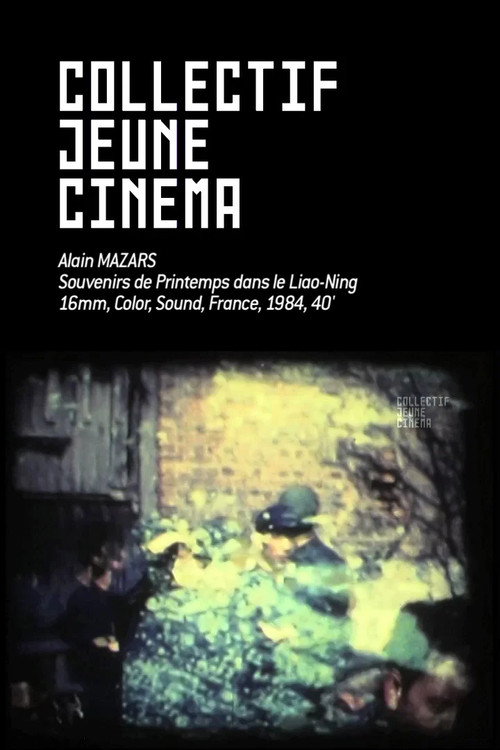
Memories of Spring in Liao Ning 1981
French director Alain Mazars crafts an evocative visual diary in *Memories of Spring in Liao Ning* (1981), a haunting documentary capturing China's post-Mao transition through intimate, flickering imagery.
Director: Alain Mazars
Frequently Asked Questions
What is *Memories of Spring in Liao Ning* (1981) about?
This documentary is Alain Mazars' fragmented visual diary of rural China in the late 1970s, shortly after Mao's death. Through hastily shot images and the play of candlelight, it captures the tension between stagnation and awakening, both in a nation and a foreign teacher's mind.
Who directed *Memories of Spring in Liao Ning*?
The film was directed by Alain Mazars, a French filmmaker whose experimental approach to non-fiction cinema shines in this intimate portrait of post-revolutionary China.
Who stars in *Memories of Spring in Liao Ning*?
This documentary features no credited actors; it's a personal essay film based on Mazars' experiences as a volunteer teacher in rural Liao Ning.
Is *Memories of Spring in Liao Ning* (1981) worth watching?
As an unrated, experimental documentary, it's a niche but fascinating watch for fans of poetic cinema and historical reflections. Its 40-minute runtime and abstract style make it ideal for those who appreciate visual storytelling over conventional narratives.
How long is *Memories of Spring in Liao Ning*?
The runtime is 40 minutes.
About Memories of Spring in Liao Ning (1981) — Alain Mazars' Experimental Chronicle of Post-Mao China
French director Alain Mazars crafts an evocative visual diary in *Memories of Spring in Liao Ning* (1981), a haunting documentary capturing China's post-Mao transition through intimate, flickering imagery. Shot between 1978 and 1979 while Mazars taught in rural Liao Ning, the film transforms everyday moments—captured by candlelight—into a rapid, dreamlike sequence of memories. The fading light and blurred frames mirror the awakening of a nation and a mind, blending personal reflection with historical weight.
This experimental short strips cinema to its essence: fleeting glimpses of life in flux, where reality and memory intertwine. The absence of conventional narrative makes it a meditation on time, change, and the fragility of remembrance, all wrapped in a poetic, almost hypnotic rhythm.