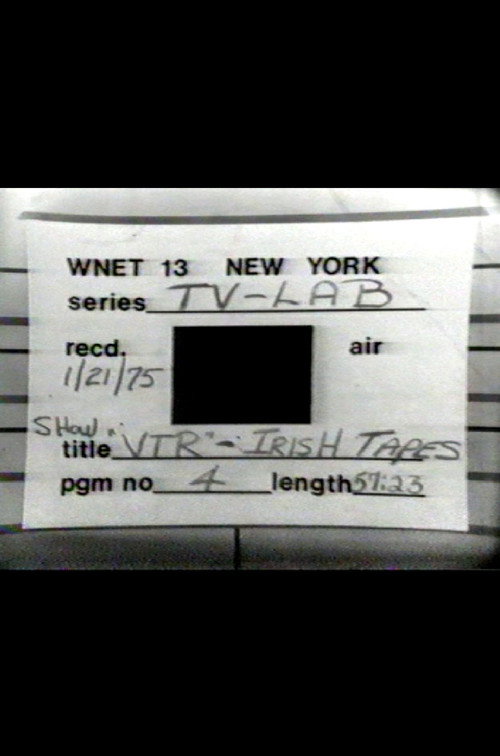
The Irish Tapes 1973
Pioneering in more ways than one, *The Irish Tapes* (1973) stands as a groundbreaking documentary that reshaped how political filmmaking could harness the raw immediacy of early video technology.
Director: John Reilly
Frequently Asked Questions
What is The Irish Tapes (1973) about?
This documentary chronicles the Irish-American solidarity movement of the early 1970s through a groundbreaking three-year filming project. It documents protests, rallies, and everyday life from the perspective of a group tied to the Official IRA, offering a raw, unfiltered view of a pivotal moment in history.
Who directed The Irish Tapes?
The Irish Tapes was directed by John Reilly, a filmmaker who pioneered the use of portable video technology in documentary storytelling.
Who stars in The Irish Tapes?
Cast information is not available for this film.
Is The Irish Tapes (1973) worth watching?
While not rated on IMDb, *The Irish Tapes* remains a fascinating artifact for documentary enthusiasts and students of political film. Its innovative multi-monitor format and historical significance make it a compelling watch for those interested in the intersection of media and activism.
How long is The Irish Tapes?
The Irish Tapes runs for 50 minutes.
About The Irish Tapes (1973) — The Documentary Shot on Early Video That Captured a Movement
Pioneering in more ways than one, *The Irish Tapes* (1973) stands as a groundbreaking documentary that reshaped how political filmmaking could harness the raw immediacy of early video technology. Shot over three turbulent years in the early '70s by director John Reilly and collaborator Stefan Moore, this 50-minute work captures the pulse of a movement through twelve-monitor installations and later a US television broadcast in 1975. Supported by the National Association for Irish Freedom—then linked to the Official IRA—Reilly's camera becomes an unflinching witness to a moment charged with ideological fervor and cultural identity.
The film blends visceral immediacy with layered reflection, weaving images of protest, daily life, and political rhetoric into a tapestry that feels both intimate and epic. Shot on the then-new 1/2-inch portable videotape format, it wasn't just recording history—it was redefining how history could be seen and shared. The result is a visually arresting time capsule that pulses with urgency, offering viewers a rare window into a pivotal era of Irish-American activism and solidarity.