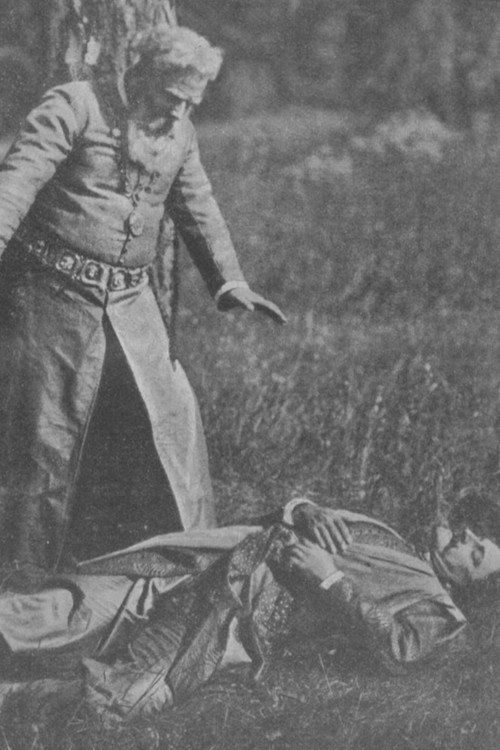
Mazepa 1914
Dive into the early 20th-century drama *Mazepa (1914)*, a silent short film directed by Pyotr Chardynin that distills the raw power of ambition and romance into just 16 minutes.
Director: Pyotr Chardynin
Cast

Frequently Asked Questions
What is Mazepa (1914) about?
*Mazepa* follows the rise and fall of Ivan Mazepa, a nobleman whose forbidden love and political ambitions lead to a dramatic confrontation with fate. The film adapts Juliusz Słowacki's poem to bring this historical figure's turbulent story to life in gripping, concise fashion.
Who directed Mazepa?
The film was directed by Pyotr Chardynin, a pioneering figure in early Russian and Ukrainian cinema known for his dramatic storytelling.
Who stars in Mazepa?
The cast features Ivan Mosjoukine as Ivan Mazepa, alongside Arseniy Bibikov, Edward Puchalski, Nadezhda Nelskaya, and Nikolai Nikolsky in key roles.
Is Mazepa (1914) worth watching?
As a silent-era historical drama, *Mazepa* offers a fascinating snapshot of early filmmaking with a compelling story. While its short runtime may not satisfy modern audiences seeking epic scale, its themes of ambition and romance make it a niche but rewarding watch for silent cinema enthusiasts.
How long is Mazepa?
The film has a runtime of 16 minutes.
About Mazepa (1914) — A Fiery Silent-Era Drama of Passion and Power
Dive into the early 20th-century drama *Mazepa (1914)*, a silent short film directed by Pyotr Chardynin that distills the raw power of ambition and romance into just 16 minutes. Adapted from Juliusz Słowacki's evocative poem, this historical drama transports viewers to the turbulent 18th century, where the titular Ivan Mazepa's fate becomes a tragic tale of love, betrayal, and political intrigue. With Ivan Mosjoukine delivering a magnetic performance as the rebellious nobleman, the film contrasts sweeping landscapes with intimate, high-stakes encounters, capturing the era's tension between personal desire and national duty.
Chardynin's direction infuses the story with a sense of urgency and intimacy, using stark black-and-white cinematography to highlight the emotional extremes of Mazepa's journey. The film's themes of power, passion, and moral ambiguity resonate through its concise runtime, offering a glimpse into the dramatic potential of early cinema. Whether you're a fan of historical epics or silent-era storytelling, *Mazepa* stands as a compelling exploration of a figure whose legend continues to captivate.