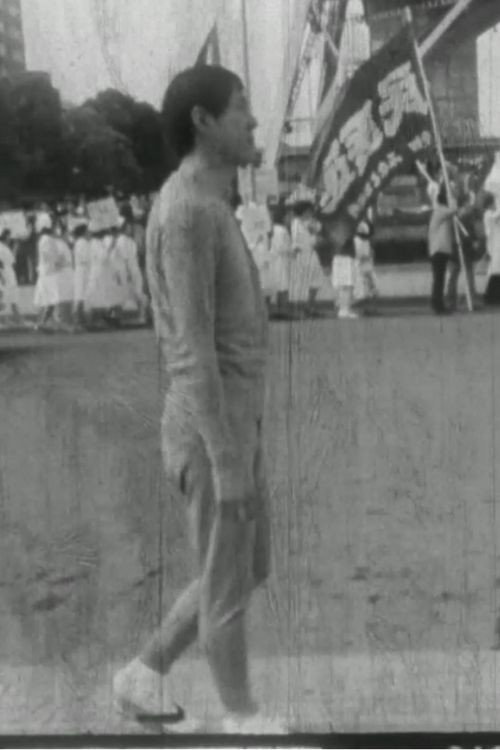
Walking Man 1969
Dive into the minimalist world of Iwata Shin'ichi's *Walking Man (1969)*, a 15-minute short film that captures the quiet rhythm of urban life.
Director: Iwata Shin’ichi
Frequently Asked Questions
What is Walking Man (1969) about?
The film follows a man from the Zero Jigen artistic group as he walks through the streets of Nagoya, using the journey to explore themes of anonymity and the beauty of everyday moments. Shot in black-and-white, it strips away dialogue to focus on motion and atmosphere.
Who directed Walking Man?
Walking Man was directed by Iwata Shin'ichi, a figure known for his experimental approach to filmmaking in Japan's underground cinema scene of the 1960s.
Who stars in Walking Man?
The film features a single prominent figure from the Zero Jigen collective, though specific cast details are not widely documented.
Is Walking Man (1969) worth watching?
At just 15 minutes, *Walking Man* is a niche but intriguing watch for those interested in avant-garde cinema or 1960s Japanese counterculture. Its experimental style and haunting visuals make it a memorable, if unconventional, experience.
How long is Walking Man?
The film has a runtime of 15 minutes.
About Walking Man (1969) — A Minimalist Short Film Capturing Urban Solitude
Dive into the minimalist world of Iwata Shin'ichi's *Walking Man (1969)*, a 15-minute short film that captures the quiet rhythm of urban life. Through the lens of Nagoya's streets, the movie follows a lone figure from the avant-garde Zero Jigen collective, who drifts through the cityscape with an air of deliberate anonymity. Shot in stark black-and-white, the film strips away dialogue and plot to focus on movement, texture, and the interplay of light and shadow. Its themes of alienation, anonymity, and the search for meaning in the mundane resonate as deeply today as they did over half a century ago.
While lacking traditional narrative structure, *Walking Man* stands out for its experimental approach and the director's keen eye for composition. The monochrome aesthetic amplifies the film's introspective mood, making every frame feel like a snapshot of a fleeting moment. For fans of underground cinema or those curious about Japan's 1960s counterculture, this short but striking piece offers a glimpse into a bold, unfiltered creative vision.