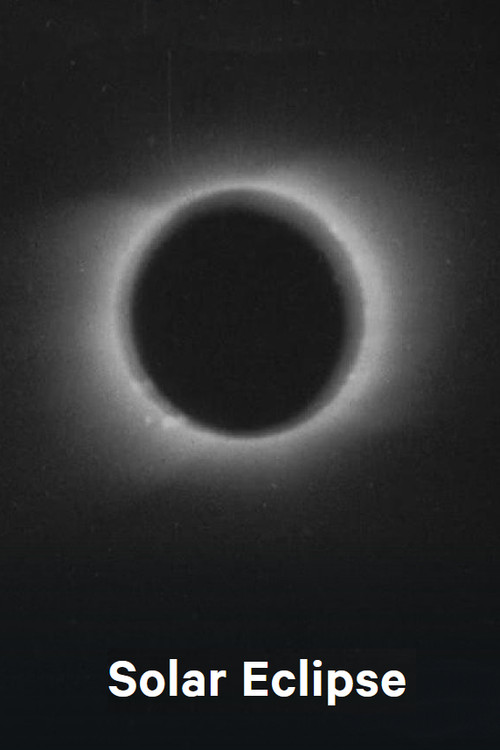
Solar Eclipse 1900
Step back in time to May 28, 1900, when magician-turned-filmmaker Nevil Maskelyne captured one of nature's most dramatic spectacles on celluloid.
Director: Nevil Maskelyne
Frequently Asked Questions
What is Solar Eclipse (1900) about?
This short documentary by Nevil Maskelyne captures the rare total solar eclipse of May 28, 1900, as it unfolded over North Carolina. The film documents the dramatic darkening of the sky during the eclipse, preserving a pivotal moment in both astronomical history and early cinema.
Who directed Solar Eclipse?
The film was directed by Nevil Maskelyne, a renowned magician and inventor known for blending science with spectacle in his work.
Who stars in Solar Eclipse?
Director information is not available. Cast details for this 1900 documentary are also not listed.
Is Solar Eclipse (1900) worth watching?
Despite its brevity and silent format, Solar Eclipse (1900) is a historically significant short film. As one of the earliest surviving recordings of a solar eclipse, it offers a unique lens into early cinema and astronomical observation. For fans of film history or astronomy, it's a fascinating glimpse into the past.
How long is Solar Eclipse?
The film runs for approximately 2 minutes.
About Solar Eclipse (1900) — The 1900 Eclipse Captured in One of Film's First Celestial Records
Step back in time to May 28, 1900, when magician-turned-filmmaker Nevil Maskelyne captured one of nature's most dramatic spectacles on celluloid. While on expedition with The British Astronomical Association in North Carolina, Maskelyne documented a total solar eclipse, freezing the fleeting moment of darkness when the moon blots out the sun in a silent, grainy black-and-white film. Just two minutes long, this pioneering documentary preserves not only the astronomical event but also the awe of an era when science and spectacle collide. The film offers a glimpse into early cinema's power to astonish, blending scientific documentation with the cinematic magic Maskelyne knew so well.
Solar Eclipse (1900) remains a landmark in cinema history, showcasing the potential of motion pictures to record rare natural phenomena at the dawn of the 20th century. Though brief and rudimentary by today's standards, its historical value is immense—it's one of the earliest surviving attempts to immortalize a celestial event on camera. For film buffs and astronomy enthusiasts alike, it's a mesmerizing relic that connects the wonder of science with the magic of early filmmaking.