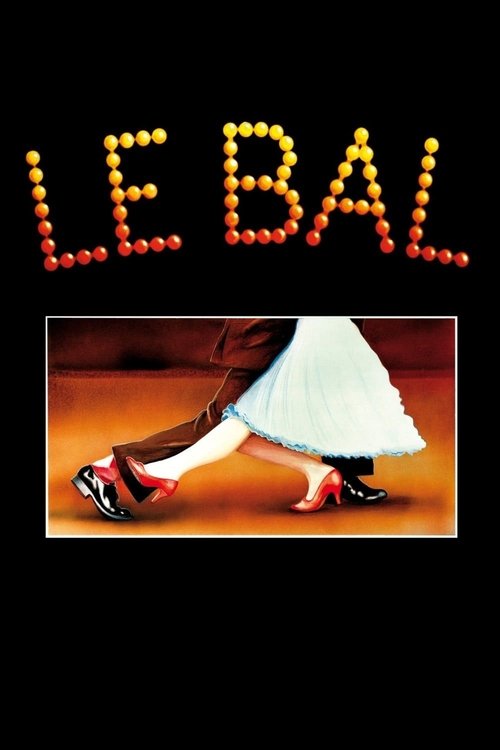
Le Bal 1983
Le Bal (1983), directed by the masterful Ettore Scola, is a dazzling tapestry of French history told through the lens of a Parisian nightclub's ever-changing dance floor.
Director: Ettore Scola
Cast


Frequently Asked Questions
What is Le Bal (1983) about?
Le Bal is a visually stunning film set in a Parisian nightclub, where choreographed song and dance routines unfold against the backdrop of 20th-century France's political and cultural shifts. The story follows a rotating cast of characters, from everyday citizens to historical figures, as they celebrate and satirize the nation's evolving identity.
Who directed Le Bal?
Ettore Scola directed Le Bal (1983). Known for his sharp social commentary and innovative storytelling, Scola crafts a film that blends history with entertainment seamlessly.
Who stars in Le Bal?
The film features a talented ensemble cast including Marc Berman, Christophe Allwright, Étienne Guichard, Régis Bouquet, and Francesco De Rosa.
Is Le Bal (1983) worth watching?
Le Bal (1983) is a unique and visually captivating film that offers a fresh perspective on historical storytelling. Its blend of music, comedy, and drama, along with Scola's direction, makes it a standout for fans of artistic cinema who appreciate innovative filmmaking.
How long is Le Bal?
Le Bal (1983) has a runtime of 112 minutes, offering a concise yet immersive cinematic experience.
🎥 Trailer
Le Bal (1983): A Nightclub Odyssey Through 20th-Century France
Le Bal (1983), directed by the masterful Ettore Scola, is a dazzling tapestry of French history told through the lens of a Parisian nightclub's ever-changing dance floor. This film weaves together music, comedy, and drama to celebrate and satirize the cultural and political evolution of 20th-century France, from the Roaring Twenties to the rebellious spirit of the 1960s. With a diverse cast of characters—ranging from a humble waiter to Nazi collaborators, resistance fighters, and student protestors—Le Bal captures the spirit of an era defined by both joy and upheaval. The film's vibrant choreography and anachronistic storytelling create an immersive atmosphere that blurs the line between spectacle and reflection.
Scola's vision transforms a simple nightclub into a microcosm of France itself, where each dance routine serves as a mirror to the nation's triumphs and struggles. The film's lack of a traditional narrative is deliberate, allowing the viewer to experience history as a series of fleeting yet unforgettable moments. Whether you're drawn to its infectious energy or its sharp social commentary, Le Bal (1983) stands as a testament to the power of cinema to celebrate and critique the past.