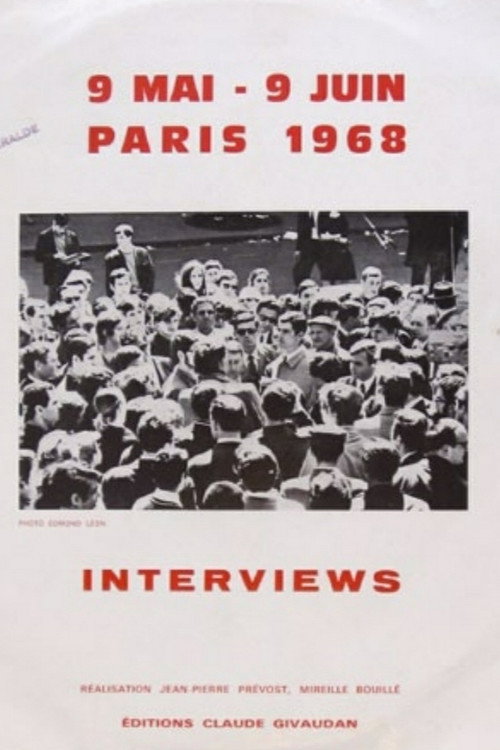
9 mai - 9 juin 1968
Step into the vivid immediacy of spring 1968 with Mireille Bouillé's intimate documentary *9 mai - 9 juin (1968)*.
Director: Mireille Bouillé
Frequently Asked Questions
What is 9 mai - 9 juin (1968) about?
This documentary by Mireille Bouillé documents the social and political ferment in Paris during the month of May and early June 1968. Through candid footage, it captures the daily life, protests, and conversations that defined a pivotal moment in French history when students and workers united against the status quo.
Who directed 9 mai - 9 juin?
Mireille Bouillé directed *9 mai - 9 juin*. Her work as a filmmaker during this era reflects a commitment to capturing real-life transformations through the lens of cinema.
Who stars in 9 mai - 9 juin?
The film features a diverse range of voices from 1968 Paris—students, workers, intellectuals, and everyday citizens—whose collective presence shapes the narrative rather than a traditional cast.
Is 9 mai - 9 juin (1968) worth watching?
For fans of historical documentaries or those intrigued by the cultural legacy of 1968, *9 mai - 9 juin* offers a compelling, firsthand look at a defining chapter in modern history. Its raw authenticity and emphasis on collective action make it a valuable piece of cinematic time travel.
How long is 9 mai - 9 juin?
The film runs for 107 minutes, offering a detailed and immersive exploration of May and early June 1968 in Paris.
About 9 mai - 9 juin (1968) — A Spring in Paris Captured on Film by Mireille Bouillé
Step into the vivid immediacy of spring 1968 with Mireille Bouillé's intimate documentary *9 mai - 9 juin (1968)*. Over 107 minutes, the film immerses viewers in the raw energy and social upheaval of Paris during one transformative month, capturing the pulse of a city on the brink of change. Bouillé's lens focuses on ordinary voices and fleeting moments, weaving together the whispers and shouts of students, workers, and passersby whose collective actions would ripple across history. The black-and-white visuals frame both the euphoria of protest and the quiet resilience of daily life, creating a visual diary of a moment when ideals clashed with institutions. Themes of youth rebellion, solidarity, and the power of collective action resonate through every frame, offering a window into the spirit of an era that still echoes today.
While official records remain sparse, the film's enduring significance lies in its unfiltered portrayal of a society challenging its own foundations. The documentary's observational style draws viewers into the streets, cafés, and assembly halls where history was being written in real time. The atmosphere is electric yet intimate, blending urgency with tenderness as Bouillé turns her camera on the faces behind the headlines. *9 mai - 9 juin* stands as both a time capsule and a testament to cinema's role in preserving the heartbeat of social movements, making it essential viewing for anyone seeking to understand the roots of modern activism.