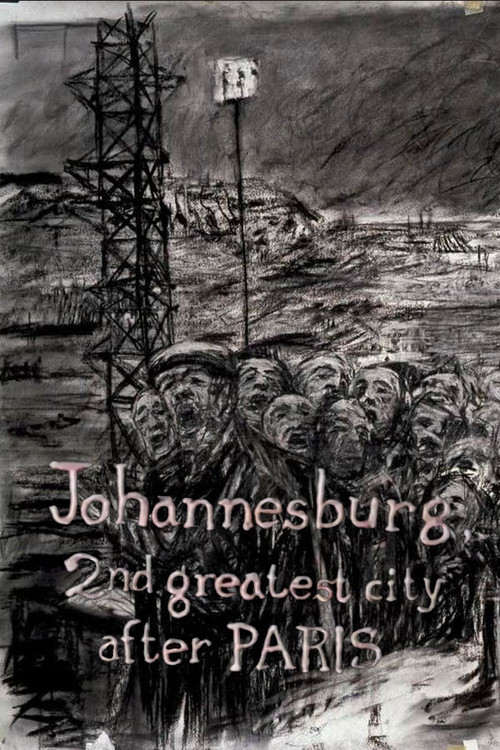
Johannesburg, 2nd Greatest City After Paris 1989
Dive into William Kentridge's evocative 1989 animated short *Johannesburg, 2nd Greatest City After Paris*, a hauntingly surreal tribute to the South African metropolis through the lens of apartheid-era tensions.
Director: William Kentridge
Frequently Asked Questions
What is Johannesburg, 2nd Greatest City After Paris (1989) about?
William Kentridge's experimental short explores Johannesburg through the intertwined lives of three characters against the backdrop of apartheid's final days. The film uses dreamlike animation to critique socio-political power structures, blending personal stories with the city's turbulent history.
Who directed Johannesburg, 2nd Greatest City After Paris?
The film was directed by William Kentridge, a South African artist renowned for his politically charged animations and charcoal drawings.
Who stars in Johannesburg, 2nd Greatest City After Paris?
The film features Soho Eckstein, his wife, and Felix Teitelbaum as its central characters, though they appear as animated personas rather than traditional actors.
Is Johannesburg, 2nd Greatest City After Paris (1989) worth watching?
While short in runtime, this 1989 animated film packs a formidable punch with its striking visuals and thematic depth. It's a niche but rewarding watch for fans of avant-garde cinema and historical allegories, offering a unique perspective on apartheid-era South Africa.
How long is Johannesburg, 2nd Greatest City After Paris?
The film runs for 8 minutes.
About Johannesburg, 2nd Greatest City After Paris (1989) — Kentridge's Animated Allegory of Apartheid-Era Johannesburg
Dive into William Kentridge's evocative 1989 animated short *Johannesburg, 2nd Greatest City After Paris*, a hauntingly surreal tribute to the South African metropolis through the lens of apartheid-era tensions. This eight-minute masterpiece, crafted from just 25 charcoal drawings, kicks off Kentridge's *Drawing for Protection* series, introducing his iconic allegorical trio—Soho Eckstein, his wife, and the introspective Felix Teitelbaum. Set against Johannesburg's crumbling political landscape, the film weaves personal drama into a broader commentary on power, inequality, and the weight of history.
The movie's stark visual style, blending irony with raw emotion, elevates it beyond a simple animation into a poignant socio-political statement. Kentridge's meta-narrative unfolds through dreamlike sequences, reflecting the fractures of a society on the brink of change. For cinephiles and history buffs alike, this short film offers a condensed yet profound cinematic experience, capturing the city's grit and grandeur with unflinching honesty.