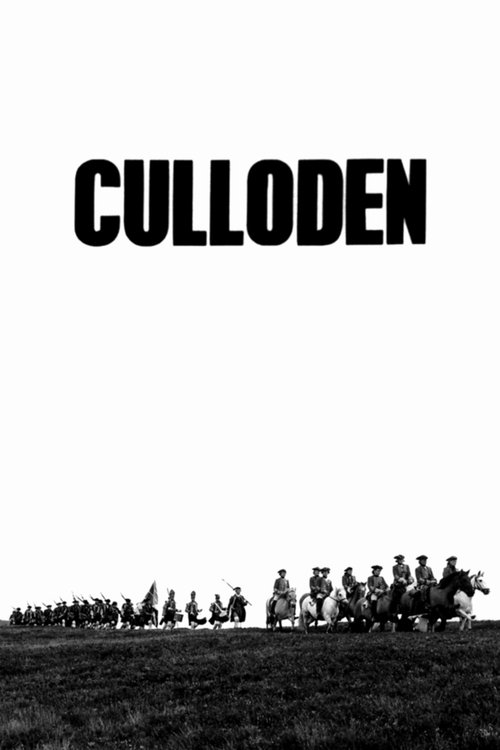
Culloden 1964
Peter Watkins' Culloden (1964) plunges viewers into the heart of one of Britain's most harrowing military disasters, shot in stark black-and-white realism.
Director: Peter Watkins
Cast
Frequently Asked Questions
What is Culloden (1964) about?
Culloden (1964) depicts the disastrous Battle of Culloden, where poor leadership and tactical blunders led to a bloody defeat for the Jacobite forces. The film centers on the human toll—soldiers, families, and survivors—rather than glorifying combat. It's a stark reminder of how politics and war leave ordinary lives in ruins.
Who directed Culloden?
Culloden was directed by Peter Watkins, a filmmaker whose provocative style blended historical drama with documentary realism.
Who stars in Culloden?
The film features George McBean, Olivier Espitalier-Noel, Tony Cosgrove, Robert Oates, and Patrick Watkins among its cast.
Is Culloden (1964) worth watching?
Despite its unrated status, Culloden is a masterclass in historical storytelling and deserves recognition for its raw, unfiltered portrayal of war's human cost. As a war drama, it offers more than just action—it's a compelling, if unsettling, examination of tragedy and responsibility.
How long is Culloden?
Culloden runs for 69 minutes.
About Culloden (1964) — A Gritty War Drama Exposing Britain's Forgotten Massacre
Peter Watkins' Culloden (1964) plunges viewers into the heart of one of Britain's most harrowing military disasters, shot in stark black-and-white realism. The film reenacts the Battle of Culloden, fought on a bleak Scottish moor in 1746, where brutal mismanagement and sheer military incompetence led to catastrophic loss of life. Watkins strips away romanticized notions of warfare, focusing instead on the raw suffering of soldiers, civilians, and families caught in the chaos. Through improvised dialogue, documentary-style camerawork, and unflinching close-ups, the film memorializes the forgotten victims—not just the fallen soldiers, but the women, children, and survivors whose lives were forever scarred.
Culloden (1964) is a war drama that doubles as a historical indictment, blending the immediacy of a newsreel with the emotional weight of a tragedy. The director's uncompromising approach forces audiences to confront not only the violence of the past but the human cost of political hubris and poor leadership. Atmospherically cold and unforgiving, the movie lingers on the silence between screams, the dirt-caked faces of the dying, and the eerie stillness that follows disaster.