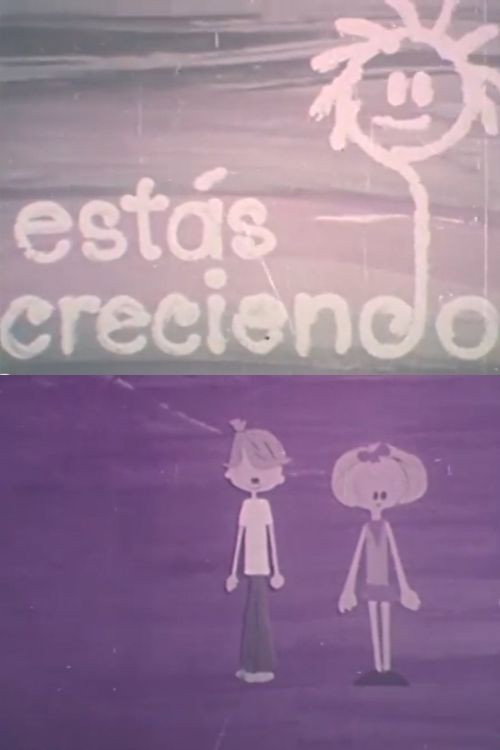
Estás creciendo 1972
Dive into *Estás creyendo (1972)*, a pioneering short film by Ricardo Alventosa that blends documentary realism with animated storytelling to tackle vital themes of sexual education and contraception for young audiences.
Director: Ricardo Alventosa
Cast

Frequently Asked Questions
What is Estás creyendo (1972) about?
This 11-minute animated documentary serves as an educational tool, focusing on sexual education and contraception for young viewers. Through a blend of documentary-style narration and animation, it delivers essential information in an accessible and engaging manner.
Who directed Estás creyendo?
Ricardo Alventosa directed *Estás creciendo*, crafting a film that prioritizes clarity and education over entertainment.
Who stars in Estás creciendo?
The film features Edgardo Suárez as the primary voice and presence, guiding viewers through its educational narrative.
Is Estás creciendo (1972) worth watching?
While not a mainstream cinematic experience, *Estás creciendo* holds value as a historical and educational piece. Its 11-minute runtime and straightforward approach make it an intriguing watch for those interested in the evolution of sexual education in media.
How long is Estás creciendo?
*Estás creciendo* has a runtime of 11 minutes.
About Estás creciendo (1972) — Exploring the groundbreaking animated documentary on sexual education
Dive into *Estás creyendo (1972)*, a pioneering short film by Ricardo Alventosa that blends documentary realism with animated storytelling to tackle vital themes of sexual education and contraception for young audiences. In just 11 minutes, the film delivers a straightforward yet thoughtfully crafted lesson, blending factual information with engaging visuals to resonate with its target demographic. The atmosphere is educational yet approachable, aiming to demystify complex topics with clarity and sensitivity, making it a unique entry in the realm of socially conscious cinema.
This groundbreaking animated documentary stands out for its commitment to addressing youth curiosity with honesty and tact, positioning it as both a cultural artifact and an informative resource. Alventosa's direction ensures the film avoids condescension, instead fostering an environment of trust and understanding. Whether you're a student, educator, or cinephile interested in the history of educational media, *Estás creciendo (1972)* offers a brief but impactful glimpse into how cinema can bridge gaps in public knowledge.