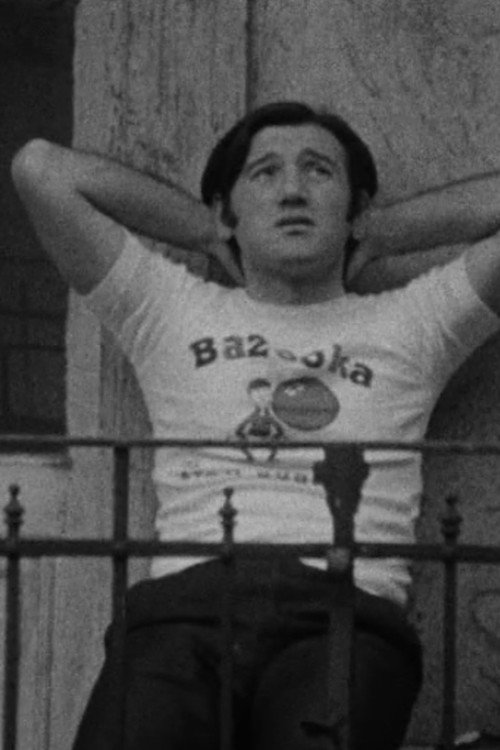
The Act of Thinking 1968
In *The Act of Thinking* (1968), Austrian avant-garde filmmaker Ernst Schmidt Jr. crafts a minimalist yet profound meditation on cinema itself.
Director: Ernst Schmidt Jr.
Frequently Asked Questions
What is *The Act of Thinking* (1968) about?
This experimental short explores the act of thinking through art by juxtaposing artist Peter Weibel's silent gaze with his own dense, self-reflective text on filmmaking. The film questions how language and imagery intersect—and fail—to convey complex ideas.
Who directed *The Act of Thinking*?
The film was directed by Ernst Schmidt Jr., a key figure in the Austrian avant-garde movement whose work often challenged traditional cinematic conventions.
Who stars in *The Act of Thinking*?
The film's sole identifiable participant is Peter Weibel, the conceptual artist and theorist whose presence and voice drive the piece.
Is *The Act of Thinking* (1968) worth watching?
While it's a niche experimental piece, its 3-minute runtime makes it accessible and intellectually stimulating for fans of avant-garde cinema. Its exploration of film as both medium and message offers a unique, thought-provoking experience not found in mainstream cinema.
How long is *The Act of Thinking*?
The runtime of *The Act of Thinking* is approximately 3 minutes.
About The Act of Thinking (1968) — A 3-Minute Avant-Garde Experiment on Film, Language, and Perception
In *The Act of Thinking* (1968), Austrian avant-garde filmmaker Ernst Schmidt Jr. crafts a minimalist yet profound meditation on cinema itself. The 3-minute short centers on conceptual artist Peter Weibel, who stares directly into the camera while reciting his own dense, self-critical text *Nimm eine Handvoll Zelluloid* ("Take a handful of celluloid"). This interplay between image and language exposes the gaps in human communication—how even the most precise ideas falter when translated into imperfect perception. Shot in stark black-and-white, the film's hypnotic stillness invites viewers to ponder the mechanics of filmmaking, the limits of expression, and the silent dialogue between artist and audience.
Schmidt Jr.'s subtle visual approach contrasts sharply with Weibel's verbose narration, creating a tension that feels both playful and intellectually rigorous. The film's brevity belies its ambition, transforming a brief experimental piece into a microcosm of film theory. For cinephiles and artists alike, *The Act of Thinking* (1968) serves as a fascinating entry point into 1960s avant-garde experimentation, where every frame and syllable feels deliberate.