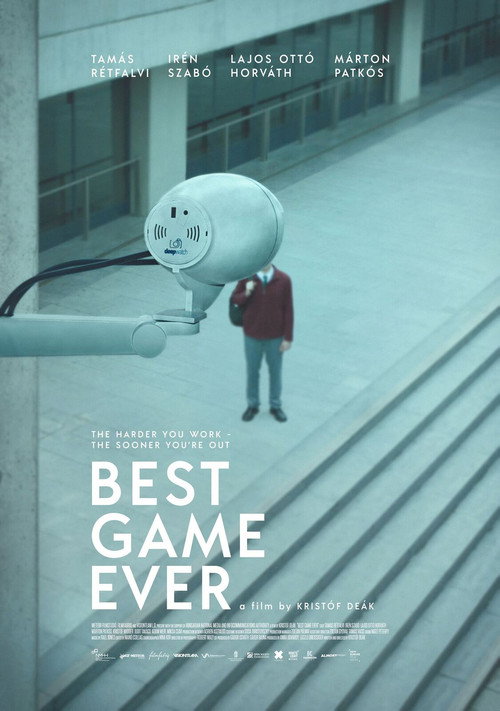
Best Game Ever 2018
"The harder you work, the sooner you're out"
In *Best Game Ever* (2018), Hungarian director Kristóf Deák crafts a sharp, 20-minute drama that pits two CCTV technicians against an AI-driven threat to their livelihoods.
Director: Kristóf Deák
Cast

Frequently Asked Questions
What is Best Game Ever (2018) about?
This 20-minute Hungarian drama follows two CCTV technicians who discover an AI system designed to replace their jobs. Faced with obsolescence, they must outthink the machine before it renders them obsolete—a high-stakes battle of wits in a world where technology moves faster than humans.
Who directed Best Game Ever?
Best Game Ever was directed by Kristóf Deák, a filmmaker known for his sharp, character-driven storytelling and ability to craft compelling narratives within tight constraints.
Who stars in Best Game Ever?
The film stars Tamás Rétfalvi, Irén Szabó, and Lajos Ottó Horváth in its leading roles.
Is Best Game Ever (2018) worth watching?
While *Best Game Ever* is unrated on IMDb, its clever premise, tight execution, and exploration of timely themes make it a standout short film. Fans of workplace thrillers or AI-driven narratives will likely find it engaging, even if its runtime is brief.
How long is Best Game Ever?
Best Game Ever has a runtime of 20 minutes.
About Best Game Ever (2018) — A 20-minute workplace thriller about AI, resistance, and the future of labor
In *Best Game Ever* (2018), Hungarian director Kristóf Deák crafts a sharp, 20-minute drama that pits two CCTV technicians against an AI-driven threat to their livelihoods. With deadpan humor and a ticking-clock tension, the film follows Tamás and Irén as they realize their jobs are on the line when an automated system threatens to replace them—unless they can outsmart it first. The confined setting and minimalist storytelling amplify the stakes of their underdog battle, blending workplace drudgery with a David-versus-Goliath narrative that feels both intimate and universally relatable.
At its core, *Best Game Ever* explores themes of obsolescence in the digital age, where technology's relentless march forces human ingenuity to adapt or fall behind. The film's tone is a mix of quiet despair and dry wit, mirroring the monotony of office life with moments of unexpected triumph. With a runtime that belies its depth, Deák's direction keeps the viewer hooked, delivering a microcosm of resistance that's as thought-provoking as it is entertaining.