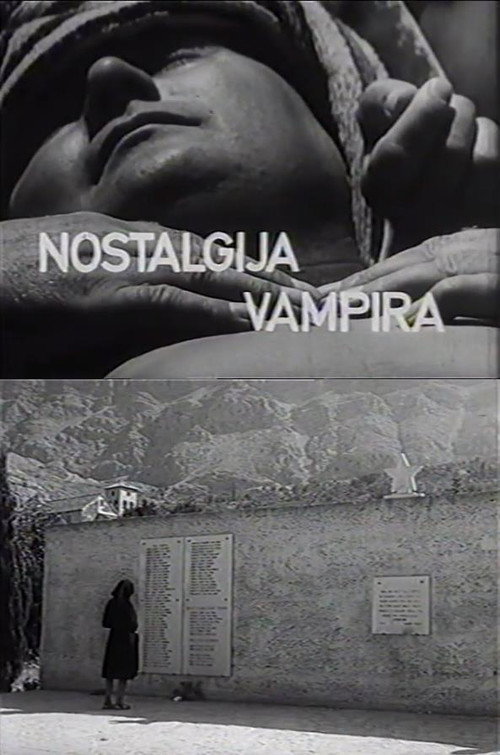
A Vampire's Nostalgia 1968
Discover the hauntingly brief yet impactful *A Vampire's Nostalgia (1968)*, a Yugoslav documentary short directed by Krsto Škanata.
Director: Krsto Škanata
Frequently Asked Questions
What is A Vampire's Nostalgia (1968) about?
*A Vampire's Nostalgia* examines a dark chapter in Dalmatian history, focusing on a local who collaborated with Italian occupiers during World War II to murder fellow citizens. The film uses this real-life betrayal to explore themes of guilt, survival, and the long shadow of war.
Who directed A Vampire's Nostalgia?
Krsto Škanata directed *A Vampire's Nostalgia (1968)*, bringing a filmmaker's eye to this harrowing historical subject.
Who stars in A Vampire's Nostalgia?
Cast details for *A Vampire's Nostalgia* are not publicly listed, leaving the focus squarely on its historical narrative and Škanata's direction.
Is A Vampire's Nostalgia (1968) worth watching?
While *A Vampire's Nostalgia* is a short documentary, its historical depth and thematic resonance make it a fascinating watch for those interested in wartime betrayals. Its 16-minute runtime is tight but impactful, offering more substance than many full-length features.
How long is A Vampire's Nostalgia?
*A Vampire's Nostalgia* runs for 16 minutes, a concise yet powerful cinematic experience.
About A Vampire's Nostalgia (1968) — A Chilling 16-Minute Yugoslav War Documentary
Discover the hauntingly brief yet impactful *A Vampire's Nostalgia (1968)*, a Yugoslav documentary short directed by Krsto Škanata. This 16-minute film dives into the dark corners of history, exploring the betrayal of a Dalmatian collaborator who aided Italian forces in the slaughter of his own people. A stark portrayal of wartime treachery, *A Vampire's Nostalgia* blends historical gravity with a poetic, almost ghostly atmosphere, leaving viewers to ponder the lingering scars of past conflicts.
Škanata's documentary is more than a historical account—it's a chilling meditation on identity and complicity. Shot in the late 1960s, the film captures a moment when Yugoslavia grappled with its wartime divisions, delivering a narrative that feels both personal and universal. Its brevity belies its emotional weight, making it a compelling watch for history buffs and film enthusiasts alike.