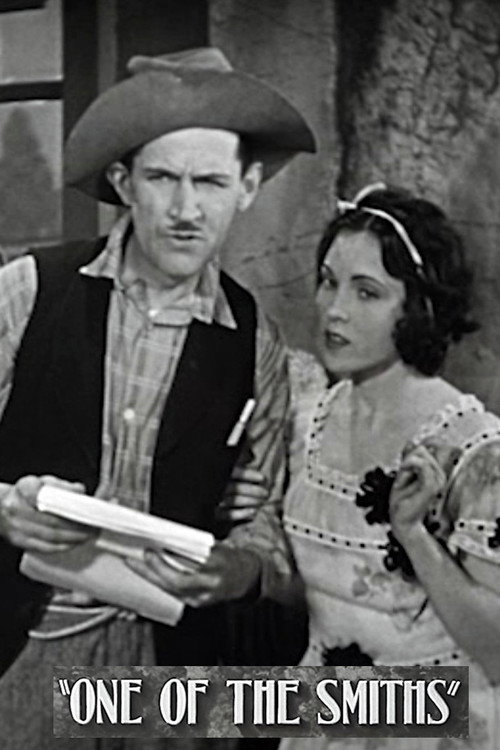
One of the Smiths 1931
When Charley Chase steps into the role of a musical-instrument salesman in *One of the Smiths* (1931), chaos is the only predictable outcome.
Director: James Parrott
Cast

Frequently Asked Questions
What is One of the Smiths (1931) about?
This 1931 short comedy follows Charley Chase as a musical-instrument salesman sent to investigate unpaid orders. His journey involves cramming oversized instruments onto a train, impersonating a hillbilly in a rural town, and surviving a chaotic barn dance where he performs a forgettable tune.
Who directed One of the Smiths?
One of the Smiths was directed by James Parrott, a filmmaker celebrated for his work with Laurel and Hardy and his knack for fast-paced, gag-driven comedies.
Who stars in One of the Smiths?
The film stars Charley Chase as the bumbling salesman, alongside James Finlayson, Louise Carver, and Charlie Hall, with Chase delivering his trademark blend of physical humor and verbal wit.
Is One of the Smiths (1931) worth watching?
As a 26-minute early sound-era comedy, *One of the Smiths* offers a fun snapshot of the era's humor, with Charley Chase's energetic performance and James Parrott's direction making it a solid pick for silent-comedy fans. Its brevity and sharp gags ensure it doesn't overstay its welcome.
How long is One of the Smiths?
One of the Smiths runs for 26 minutes.
About One of the Smiths (1931) — When Charley Chase's instruments cause more trouble than his sales pitch
When Charley Chase steps into the role of a musical-instrument salesman in *One of the Smiths* (1931), chaos is the only predictable outcome. Directed by the brilliant James Parrott, this brisk 26-minute comedy sees Chase boarding a train with a carload of unwieldy instruments, turning the confined space into a battleground of bumped heads and squawked melodies. His mission? To track down overdue payments in the sleepy town of Beaver Dam. Disguising himself as a clueless hillbilly, Chase stumbles through a barn dance, belting out "Handsome Jim" while dodging both angry recipients and his own comedic missteps.
Parrott's sharp visual gags and Chase's physical comedy turn a simple premise into a delightful romp, blending small-town charm with slapstick energy. The film's rural backdrop and Chase's relentless antics capture the absurdity of trying—and failing—to blend in, all wrapped in the golden age of silent-to-talkie transition comedy. A forgotten gem that showcases early sound-era humor at its most inventive.