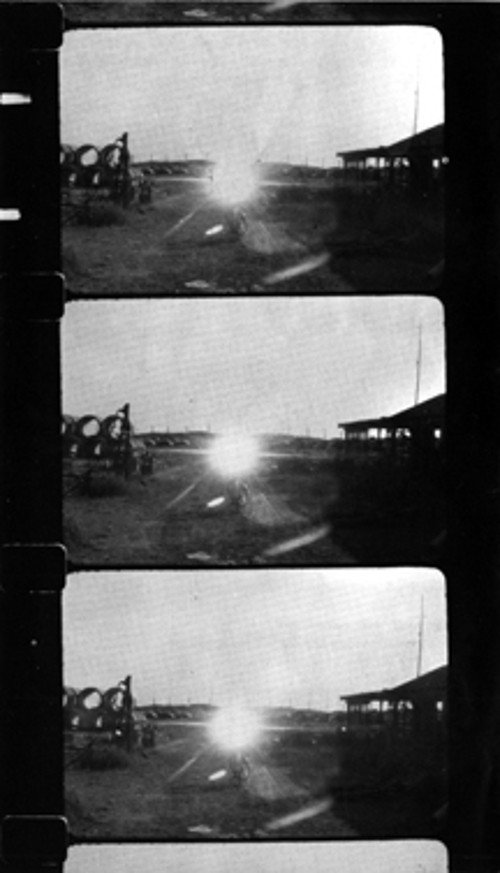
Alchemy 1971
Tsuneo Nakai's *Alchemy (1971)* transforms a simple construction site object into a hypnotic meditation on light, time, and perception.
Director: Tsuneo Nakai
Frequently Asked Questions
What is Alchemy (1971) about?
*Alchemy* is a silent, experimental short that focuses on the interplay of light and reflection, using a bicycle mirror at a construction site as its central subject. Over 24 minutes, the film evolves through a flicker effect, stripping away layers of perception to reveal something deeper in the mundane. It's less a story and more an atmospheric experience, designed to evoke contemplation and curiosity.
Who directed Alchemy?
Tsuneo Nakai directed *Alchemy*. Known for his innovative approach to experimental filmmaking, Nakai crafted this short as a study in light, film manipulation, and visual rhythm.
Who stars in Alchemy?
Cast details for *Alchemy* are not publicly listed.
Is Alchemy (1971) worth watching?
*Alchemy* is a niche gem for fans of avant-garde cinema and experimental works. Its 24-minute runtime is perfectly suited for a single, immersive viewing session. While it may not appeal to those seeking traditional storytelling, its hypnotic visuals and thematic depth make it a rewarding watch for the right audience.
How long is Alchemy?
The runtime of *Alchemy* is 24 minutes.
About Alchemy (1971) — How Tsuneo Nakai Turned a Bicycle Mirror into Cinema Gold
Tsuneo Nakai's *Alchemy (1971)* transforms a simple construction site object into a hypnotic meditation on light, time, and perception. Over its brief 24 minutes, the film unspools as a meditative experiment, where the camera lingers on the sun's reflection in a bicycle mirror—an everyday detail elevated into something almost alchemical. Nakai's craftsmanship shines through a meticulously designed masking technique, blending negative and positive film frames into a flicker effect that dismantles spatial boundaries. The result is a work that feels like both a scientific study and a poetic reverie, inviting viewers to question how we interpret reality through shifting perspectives.
Stripped of conventional narrative, *Alchemy* thrives on its experimental form, using rhythm and repetition to evoke themes of transformation and transience. The interplay of light and shadow, the gradual erosion of distance—all unfold with a quiet intensity that lingers long after the film ends. Nakai's approach bridges the gap between cinema and visual art, making it a standout in experimental filmmaking. For those drawn to works that challenge conventions, *Alchemy (1971)* offers a rare glimpse into the hidden magic of the mundane.