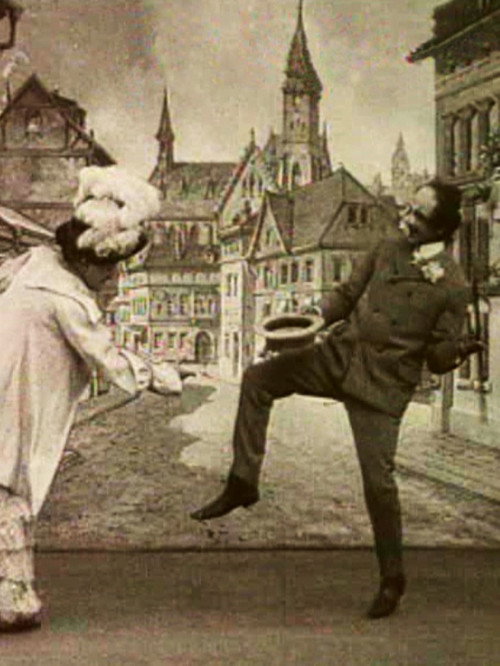
Die Macht des Walzers 1907
Step back into the silent-era charm of *Die Macht des Walzers (1907)*, a four-minute comedy that captures a timeless dance floor disaster.
Cast
Frequently Asked Questions
What is Die Macht des Walzers (1907) about?
This early silent comedy follows a man and woman whose evening at a ball transitions into a drunken escapade at a restaurant. Their waltz-induced hijinks soon turn the dining space upside down, blending elegance with mischief in a charmingly chaotic narrative.
Who directed Die Macht des Walzers?
Director information is not available.
Who stars in Die Macht des Walzers?
The film features Lucie Bernardo and Martin Martens in leading roles, bringing the story's playful antics to life with their comedic timing.
Is Die Macht des Walzers (1907) worth watching?
As an early silent-era comedy, *Die Macht des Walzers* offers a fascinating glimpse into 1907 filmmaking and comedic style. While its runtime is brief, its historical and thematic value makes it a curious watch for silent film enthusiasts and casual viewers alike.
How long is Die Macht des Walzers?
The film runs for approximately 4 minutes.
About Die Macht des Walzers (1907) – A Silent Comedy Classic of Dance-Floor Disaster
Step back into the silent-era charm of *Die Macht des Walzers (1907)*, a four-minute comedy that captures a timeless dance floor disaster. Directed by an unknown filmmaker, this early short film weaves a lighthearted narrative around a gentleman who invites a lady to a ball—only for their waltz to spill into a nearby restaurant once the music ends. The evening spirals into chaos as their drunken delight disrupts the establishment, leaving behind a trail of laughter and minor havoc. Shot in 1907, the film blends playful mischief with the elegant absurdity of early motion pictures, offering a snapshot of societal norms and comic timing from over a century ago.
Starring Lucie Bernardo and Martin Martens in leading roles, *Die Macht des Walzers* delivers a breezy, visual gag-driven experience. Its themes revolve around social etiquette, the consequences of unchecked revelry, and the universal appeal of a good dance. Though humble in length, its historical significance lies in its contribution to the comedy genre's evolution, paving the way for future slapstick and narrative shorts.