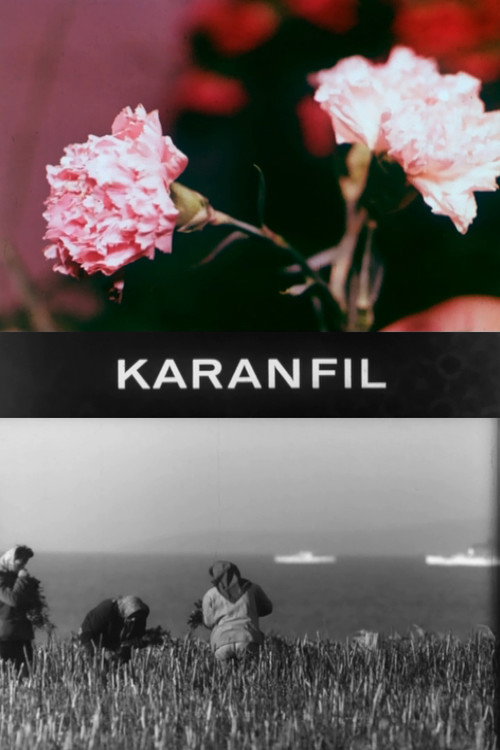
Carnation 1968
Carnation (1968) offers an intimate, dialogue-free glimpse into the daily lives of workers harvesting carnations on a Split plantation.
Director: Ranko Kursar
Frequently Asked Questions
What is Carnation (1968) about?
Carnation (1968) follows the daily routine of carnation pickers at a Split plantation, presenting their work as a quiet, rhythmic dance of labor. The film captures the hands that nurture and harvest the flowers, framed in black and white to emphasize authenticity and simplicity.
Who directed Carnation?
Carnation was directed by Ranko Kursar, a filmmaker known for his observational approach and minimalist style.
Who stars in Carnation?
The cast includes the unnamed workers of the Split plantation, whose labor and presence drive the documentary's narrative.
Is Carnation (1968) worth watching?
As a short documentary with no dialogue and a stark aesthetic, Carnation (1968) offers a unique, meditative experience. Its unfiltered look at labor and nature makes it a compelling watch for fans of observational cinema, despite its brief runtime.
How long is Carnation?
Carnation (1968) has a runtime of 10 minutes.
About Carnation (1968) — Ranko Kursar's wordless 10-minute dive into Split's carnation harvest
Carnation (1968) offers an intimate, dialogue-free glimpse into the daily lives of workers harvesting carnations on a Split plantation. Directed by Ranko Kursar, this 10-minute observational documentary strips away narration and color, immersing viewers in the raw textures and rhythms of floral cultivation. The film's stark black-and-white aesthetic strips away artifice, focusing solely on the labor and environment of carnation pickers. Without commentary or intervention, Kursar captures the quiet dignity of the workers and the serene yet industrious atmosphere of the plantation.
This short film stands as a testament to the power of pure observation in cinema. By eliminating dialogue and reducing its palette to monochrome, Carnation (1968) shifts the spotlight entirely onto the natural world and human effort, creating a meditative experience that lingers long after its brief runtime.