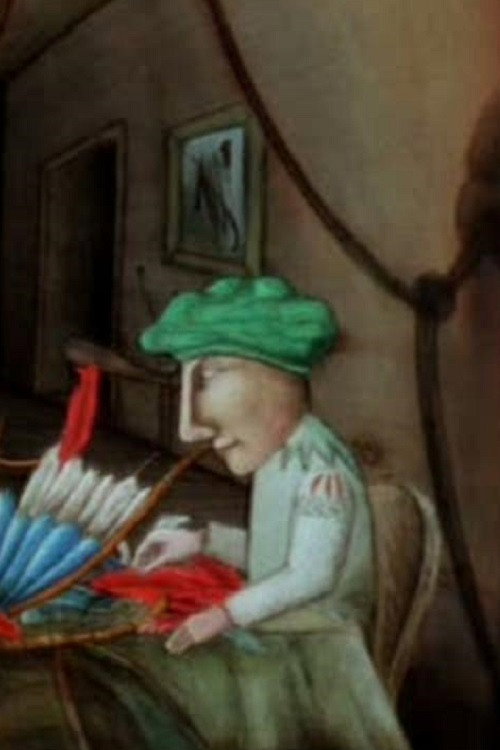
The Tailor of Ulm 1980
Step into the surreal world of *The Tailor of Ulm (1980)*, Lutz Dammbeck's groundbreaking animated short steeped in myth and existential reflection.
Director: Lutz Dammbeck
Cast
Frequently Asked Questions
What is The Tailor of Ulm (1980) about?
This animated short reimagines the myth of Icarus through a darkly poetic lens, exploring the human drive to reach beyond limits—only to confront the fragility of those aspirations. Set against a backdrop of surreal visuals, it blends hope with inevitable setbacks, leaving viewers to question what truly lies beyond the horizon.
Who directed The Tailor of Ulm?
Lutz Dammbeck directed *The Tailor of Ulm*, a film that established his reputation as a boundary-pushing animator in East Germany.
Who stars in The Tailor of Ulm?
The film features Alexander Lang as the central figure, though its narrative relies more on symbolic imagery than traditional casting.
Is The Tailor of Ulm (1980) worth watching?
As a 15-minute experimental animation, *The Tailor of Ulm* offers a dense, thought-provoking experience for fans of surreal art and classic mythology. While it lacks a measurable rating, its influence on animation and its evocative themes make it a compelling watch for niche audiences.
How long is The Tailor of Ulm?
The runtime of *The Tailor of Ulm* is 15 minutes.
About The Tailor of Ulm (1980) — A Surreal Animation on Failure and Flight
Step into the surreal world of *The Tailor of Ulm (1980)*, Lutz Dammbeck's groundbreaking animated short steeped in myth and existential reflection. Inspired by the Icarus legend, this 15-minute piece weaves a haunting metaphor about ambition, failure, and humanity's relentless pursuit of the unknown. Crafted under the guidance of East German animation pioneer Kurt Weiler, the film marks Dammbeck's bold departure into grotesque, experimental animation—a style that would define his future work. With its dreamlike visuals and symbolic storytelling, *The Tailor of Ulm* captures the tension between hope and disillusionment, all wrapped in a narrative that feels both timeless and distinctly modern.
Dammbeck's obsession with flight—a recurring motif in his filmography—first takes flight here, grounding the narrative in a sense of both liberation and impending descent. The film's surreal aesthetic and thematic depth didn't just introduce audiences to Dammbeck's unique vision; it cemented his status as a visionary among East German animators. A cryptic, poetic fable, it invites viewers to ponder the fine line between aspiration and hubris, all within a compact yet unforgettable runtime.