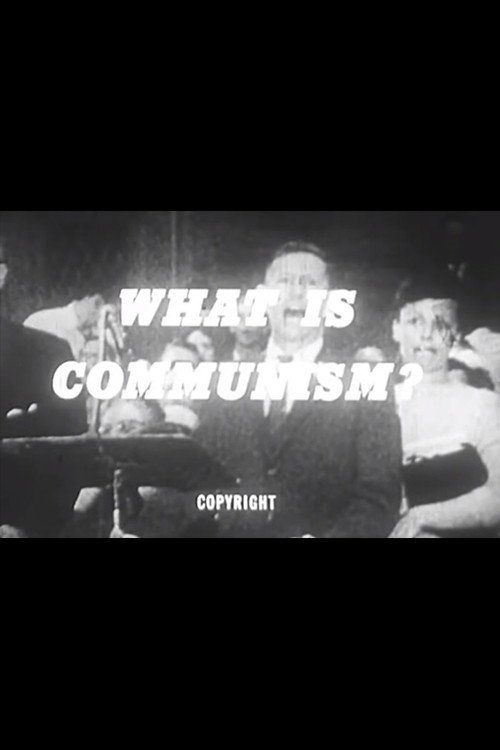
What Is Communism? 1963
Delve into the world of 'What Is Communism?' (1963), a gripping documentary hosted by celebrated double-agent Herbert A. Philbrick. This thought-provoking film explores the evils of Communism, providing a unique perspective on the dangers of ideological extremism.
Cast
Frequently Asked Questions
What is What Is Communism? (1963) about?
This documentary film explores the evils of Communism through the eyes of celebrated double-agent Herbert A. Philbrick.
Who directed What Is Communism??
Director information is not available.
Who stars in What Is Communism??
The film features Herbert A. Philbrick in the lead role.
Is What Is Communism? (1963) worth watching?
While not a blockbuster, 'What Is Communism?' (1963) is a valuable resource for those interested in the history of the Cold War and the dangers of ideological extremism.
How long is What Is Communism??
The film has a runtime of 14 minutes.
About What Is Communism? (1963) — A Historical Document of the Communist Threat
Delve into the world of 'What Is Communism?' (1963), a gripping documentary hosted by celebrated double-agent Herbert A. Philbrick. This thought-provoking film explores the evils of Communism, providing a unique perspective on the dangers of ideological extremism. With its concise 14-minute runtime, 'What Is Communism?' is an excellent addition to any collection of historical documentaries.
As Philbrick takes the stage, his passion for exposing the truth about Communism is palpable. With his experiences as a double-agent for the FBI, he offers a fascinating glimpse into the inner workings of the Communist machine. From the lecture halls to the homes of concerned citizens, 'What Is Communism?' (1963) has been a vital tool in educating the public about the threats of Communism.
This documentary not only serves as a historical record but also as a warning about the dangers of unchecked ideology. With its blend of real-life experiences and lectures, 'What Is Communism?' (1963) is a must-watch for anyone interested in understanding the complexities of the Cold War era.