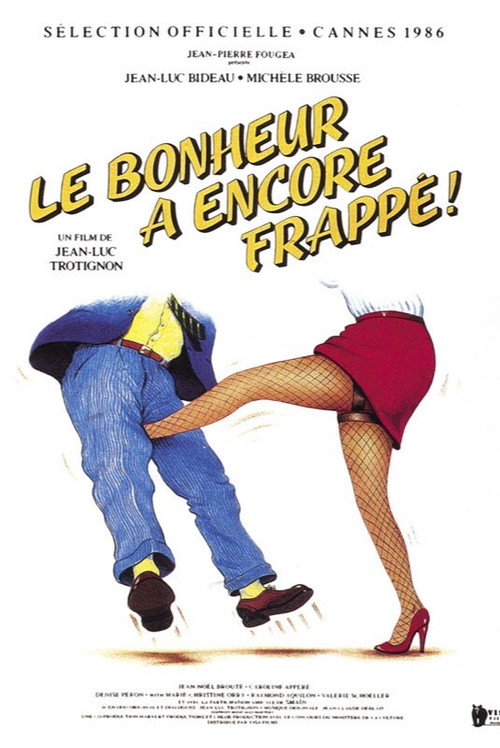
Le bonheur a encore frappé 1986
Step into the chaotic yet oddly charming world of *Le bonheur a encore frappé* (1986), Jean-Luc Trotignon's debut comedy-drama that dives headfirst into the absurdity of family life.
Director: Jean-Luc Trotignon
Cast



Frequently Asked Questions
What is Le bonheur a encore frappé (1986) about?
This 1986 French comedy-drama follows the Pinglard family, a loud, uncouth household whose antics drive their teenage daughter to distraction. When her diary becomes a casualty of their intrusive behavior, the family's already shaky dynamics spiral into comedic mayhem.
Who directed Le bonheur a encore frappé?
Jean-Luc Trotignon directed this film, marking his debut as both writer and director with a sharp, satirical eye for family dysfunction.
Who stars in Le bonheur a encore frappé?
The film features Jean-Luc Bideau as Achille Pinglard, Michèle Brousse as his wife Ginette, alongside Jean-Noël Brouté and Caroline Appere in key roles.
Is Le bonheur a encore frappé (1986) worth watching?
While it may not have an IMDb rating, *Le bonheur a encore frappé* offers a refreshing take on working-class family comedy with its blend of satire and heart. Fans of 1980s French cinema or offbeat humor will likely find its quirks endearing, even if it's not a masterpiece.
How long is Le bonheur a encore frappé?
The film runs for 80 minutes.
About Le bonheur a encore frappé (1986) — A raucous French comedy about family, privacy, and unfiltered chaos
Step into the chaotic yet oddly charming world of *Le bonheur a encore frappé* (1986), Jean-Luc Trotignon's debut comedy-drama that dives headfirst into the absurdity of family life. At the center of this French farce is the Pinglard clan—a working-class duo whose unfiltered antics push their teenage daughter to the brink. Achille Pinglard, portrayed with gruff charm by Jean-Luc Bideau, is a factory foreman whose coarse behavior clashes with his wife Ginette (Michèle Brousse), a ticket attendant at an adult theater. Their lack of filter extends to their daughter's private diary, which they casually 'borrow' for their own amusement, sparking equal parts hilarity and frustration. The film's tone balances sharp satire with lighthearted warmth, exploring themes of generational friction, privacy invasion, and the messy beauty of imperfect family dynamics.
Set against a backdrop of gritty realism and playful absurdity, *Le bonheur a encore frappé* (1986) delivers a unique blend of scathing humor and heartfelt moments. The family's antics—from renting out their son's room to their daughter's desperate attempts to reclaim her privacy—create a whirlwind of comedic situations that feel both exaggerated and eerily relatable. Trotignon's direction infuses the film with a raw energy, making it a standout entry in 1980s French comedy, where the line between chaos and charm is delightfully thin.