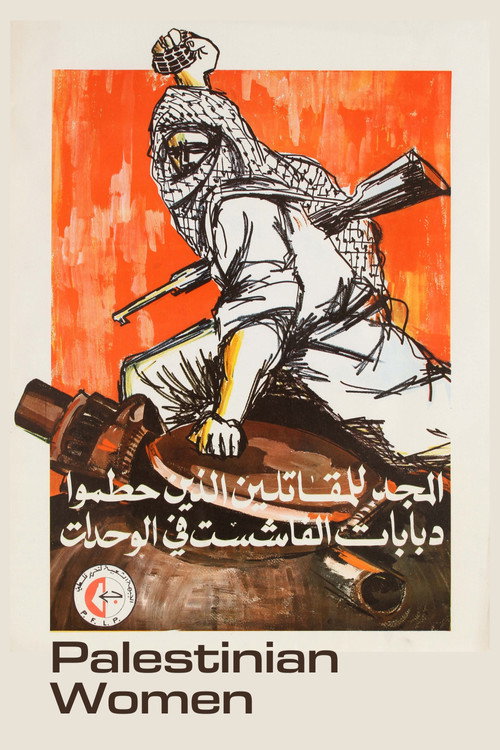
Palestinian Women 1974
A short but powerful documentary from 1974, *Palestinian Women* challenges silence and censorship to bring the unheard voices of women caught in the Israeli-Palestinian conflict to the forefront.
Director: Jocelyne Saab
Frequently Asked Questions
What is Palestinian Women (1974) about?
*Palestinian Women* sheds light on the untold stories of women affected by the Israeli-Palestinian conflict, focusing on their struggles and resilience. The film dares to confront the human cost of war, centering the often-overlooked experiences of Palestinian women. It's a stark reminder of how war reshapes lives beyond the frontlines.
Who directed Palestinian Women?
The film was directed by Jocelyne Saab, a pioneering Lebanese filmmaker known for her bold documentaries on war and human rights.
Who stars in Palestinian Women?
Director information is not available.
Is Palestinian Women (1974) worth watching?
As a concise documentary from 1974, *Palestinian Women* offers a rare and poignant perspective on a conflict that remains relevant today. Its historical significance and emotional depth make it compelling for fans of political cinema, despite its short runtime.
How long is Palestinian Women?
The film runs for 11 minutes.
About Palestinian Women (1974) — A Forbidden Documentary That Gave Voice to Palestinian Women
A short but powerful documentary from 1974, *Palestinian Women* challenges silence and censorship to bring the unheard voices of women caught in the Israeli-Palestinian conflict to the forefront. Directed by Lebanese filmmaker Jocelyne Saab, this raw 11-minute film was commissioned by France's Antenne 2 but faced immediate suppression during editing, its message deemed too bold for public broadcast. Saab's lens captures the resilience and grief of women whose lives were upended by war, framing them not as passive victims but as witnesses and survivors. The film's evocative atmosphere blends urgency with quiet defiance, creating a haunting portrait of endurance and resistance.
Years after its suppression, *Palestinian Women* resurfaced as part of a cinematic retrospective, preserved by the Cinemateca Portuguesa. Though brief, its 1974 release carries lasting significance, offering a rare female perspective on a conflict dominated by male narratives. Saab's work remains a vital piece of political cinema, bridging personal stories with broader historical struggles. Today, it stands as both a historical artifact and a testament to the power of documentary filmmaking in amplifying marginalized voices.