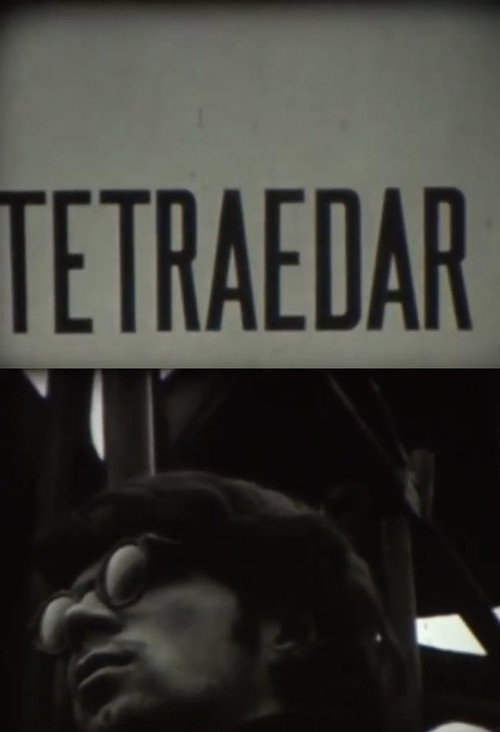
Tetrahedron 1967
Tetrahedron (1967) is a fascinating experimental short documentary directed by Vjekoslav Nakić that unfolds like a geometric puzzle.
Director: Vjekoslav Nakić
Frequently Asked Questions
What is Tetrahedron (1967) about?
This experimental short documentary divides its 9-minute runtime into four segments, each exploring a distinct theme while mirroring the structure of a tetrahedron. Its abstract approach turns the film into a visual and conceptual puzzle.
Who directed Tetrahedron?
Vjekoslav Nakić directed the film, bringing an experimental edge to this 1960s short documentary.
Who stars in Tetrahedron?
Cast details are not publicly listed, as the film focuses on conceptual themes rather than performances.
Is Tetrahedron (1967) worth watching?
As a 9-minute experimental documentary, Tetrahedron offers a unique viewing experience for fans of avant-garde cinema. Its cult status among Split's cinephiles suggests it holds niche appeal, though mainstream audiences may find it challenging. A curious watch for those who enjoy bold visual storytelling.
How long is Tetrahedron?
The film runs for 9 minutes.
About Tetrahedron (1967) — Experimental Short That Breaks the Mold
Tetrahedron (1967) is a fascinating experimental short documentary directed by Vjekoslav Nakić that unfolds like a geometric puzzle. The film's structure mirrors its titular shape—a tetrahedron—dividing its 9-minute runtime into four symmetrical segments, each exploring a distinct theme. Though its precise subjects remain unlisted, this avant-garde approach transforms the short into a hypnotic visual study, blending artistic ambition with documentary precision. It became a cult favorite among Split's cinephile community, particularly among older generations who appreciated its bold, minimalist storytelling.
Nakić's direction leans into abstraction, using the tetrahedron's mathematical elegance as a framework to dissect ideas in a way that feels both clinical and poetic. While the cast remains uncredited, the film's enduring appeal lies in its conceptual rigor rather than performances. Tetrahedron (1967) stands as a testament to 1960s experimental cinema—short, sharp, and endlessly intriguing, perfect for viewers who crave something beyond traditional narratives.