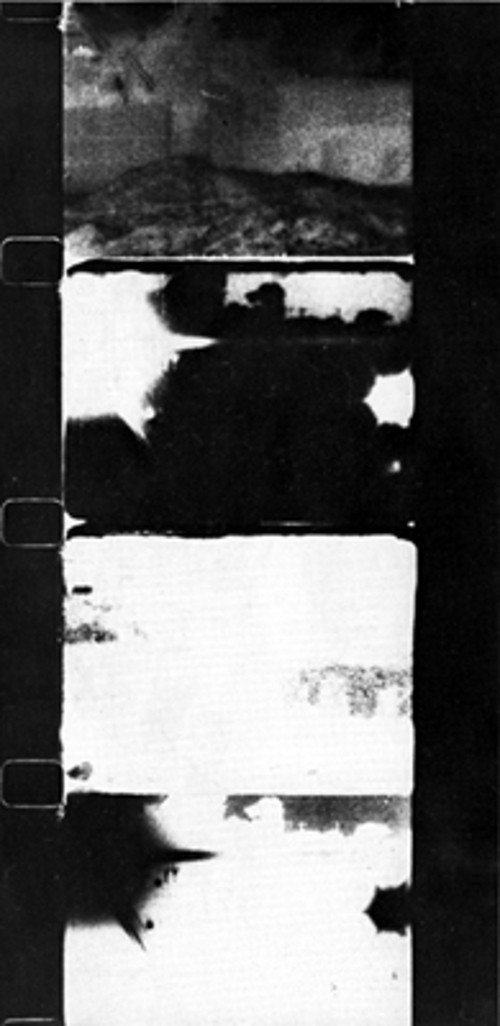
Azoth 1973
Azoth (1973), crafted by experimental filmmaker Tsuneo Nakai, is a hypnotic short film that immerses viewers in the rhythmic pulse of industrial life.
Director: Tsuneo Nakai
Frequently Asked Questions
What is Azoth (1973) about?
Azoth (1973) explores the visual and emotional resonance of an industrial zone operating ceaselessly, day and night. Using flicker patterns and positive/negative imagery, the film transforms static factory footage into a rhythmic, almost meditative experience. It's less about narrative and more about capturing the raw, mechanical pulse of existence.
Who directed Azoth?
Tsuneo Nakai directed Azoth (1973). Known for his experimental approach, Nakai crafted this short film as a study in visual rhythm and perception, pushing the boundaries of traditional filmmaking.
Who stars in Azoth?
Cast details for Azoth (1973) are not listed.
Is Azoth (1973) worth watching?
As an experimental short film, Azoth (1973) offers a unique and hypnotic viewing experience. While it may not appeal to those seeking traditional storytelling, its rhythmic visuals and innovative technique make it a fascinating watch for fans of avant-garde cinema. The film's brevity and abstract nature are its strengths, delivering impact in just 20 minutes.
How long is Azoth?
Azoth (1973) has a runtime of 20 minutes.
About Azoth (1973) — A Hypnotic Industrial Experiment in Experimental Cinema
Azoth (1973), crafted by experimental filmmaker Tsuneo Nakai, is a hypnotic short film that immerses viewers in the rhythmic pulse of industrial life. Through meticulously spliced footage—day and night shots of a factory exterior, rendered in positive and negative—Nakai transforms mundane scenes into a mesmerizing visual symphony. The interplay of light and shadow, combined with the film's flicker effect, creates an almost trance-like atmosphere, evoking themes of relentless motion, human presence despite absence, and the interplay between creation and decay. This 20-minute piece isn't just a movie; it's an experience that challenges perception, inviting audiences to see the ordinary through a surreal, almost alchemical lens. Constructed with mathematical precision, Azoth (1973) stands as a testament to experimental cinema's power to blur the line between art and industrial rhythm.
While the film's abstract nature may not cater to conventional storytelling, its hypnotic allure lies in its ability to distill the essence of a place into pure, rhythmic motion. Nakai's technique turns static images into a living, breathing entity, where the factory's ceaseless operation becomes a metaphor for the cyclical nature of existence itself. The lack of dialogue or narrative only amplifies the visual and emotional impact, leaving viewers to interpret the flicker patterns as they may. For those drawn to avant-garde cinema, Azoth (1973) is a hidden gem—short but unforgettable, a fleeting moment of cinematic innovation that lingers long after the credits roll.