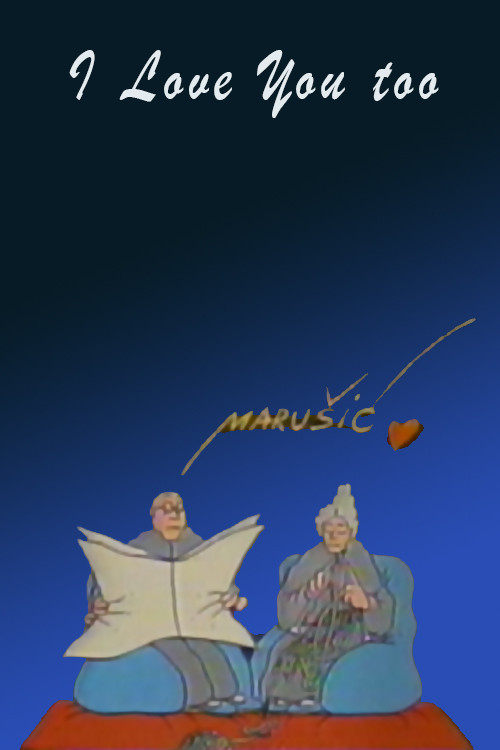
I Love You, Too... 1991
Tucked away in the early '90s animation landscape is the ultra-short romantic gem *I Love You, Too... (1991)*, directed by the versatile Joško Marušić.
Director: Joško Marušić
Frequently Asked Questions
What is *I Love You, Too... (1991)* about?
This incredibly short animated film explores the unspoken weight of saying 'I love you.' It captures a fleeting yet powerful moment where love is felt but left unspoken, emphasizing how even the simplest words can carry immense meaning.
Who directed *I Love You, Too... (1991)*?
The film was directed by Joško Marušić, a Croatian filmmaker known for his contributions to animation and storytelling.
Who stars in *I Love You, Too... (1991)*?
The cast details for the film are not publicly available, and the production features an unknown ensemble of voice actors.
Is *I Love You, Too... (1991)* worth watching?
Though it's a tiny 60-second film, its emotional depth and creative storytelling make it a hidden gem for animation enthusiasts and romantics alike. Its minimalist charm and universal theme of unspoken love set it apart as a unique cinematic experience.
How long is *I Love You, Too... (1991)*?
The runtime is listed as 1 minute, making it one of the shortest narrative films ever made.
About I Love You, Too... (1991) — The Animated Romance That Speaks Volumes in Seconds
Tucked away in the early '90s animation landscape is the ultra-short romantic gem *I Love You, Too... (1991)*, directed by the versatile Joško Marušić. Clocking in at just 60 seconds, this micro-narrative strips love down to its simplest gesture—uttering those three little words that so often get tangled on the tongue. Marušić crafts a quiet, poignant atmosphere where hesitation and heartfelt longing collide, proving that big emotions can unfold in the briefest of cinematic moments. Despite its brevity, the film lingers like a whispered confession, exploring themes of vulnerability, courage, and the unspoken power of affection.
Featuring an unknown cast, *I Love You, Too... (1991)* belongs to the animation genre, where visual storytelling elevates raw sentiment into something universally relatable. Its delicate tone and minimalist approach invite viewers to reflect on their own moments of emotional bravado—or reticence. While the film never received a wide theatrical release, its intimate charm endures for those who stumble upon it, a testament to the idea that even the smallest expressions of love can leave the deepest impressions.