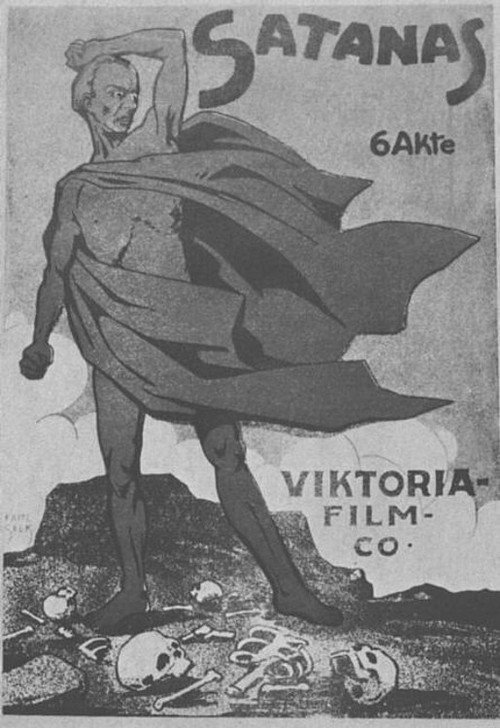
Satan 1920
Directed by the masterful F. W. Murnau, Satan (1920) is a cinematic odyssey that traverses the vast expanse of history. The film is structured into three distinct episodes, each set against a backdrop of drama and upheaval.
Director: F. W. Murnau
Cast

Frequently Asked Questions
What is Satan (1920) about?
This historical drama follows a three-part narrative that spans ancient Egypt, the Russian revolution, and the world of the Hugo novel La Fin de Satan.
Who directed Satan?
The renowned German director F. W. Murnau brought his unique vision to the film, showcasing his mastery of atmospheric lighting and composition.
Who stars in Satan?
Fritz Kortner, Else Berna, and Martin Wolfgang lead the cast in this gripping drama.
Is Satan (1920) worth watching?
While the film's current state is fragmented, its themes of rebellion and the human condition continue to captivate audiences, making it a must-see for fans of early cinema.
How long is Satan?
The film has a runtime of 54 minutes.
About Satan (1920) — A Haunting Tale of Rebellion and the Human Condition
Directed by the masterful F. W. Murnau, Satan (1920) is a cinematic odyssey that traverses the vast expanse of history. The film is structured into three distinct episodes, each set against a backdrop of drama and upheaval. The first installment is a sweeping epic set in ancient Egypt, while the second is a haunting adaptation of the Hugo novel La Fin de Satan. The third and final chapter transports viewers to the tumultuous Russian revolution of 1917. With a runtime of just 54 minutes, Satan is a concise yet impactful work that showcases Murnau's mastery of the medium. The film's themes of rebellion, power, and the human condition are timeless and thought-provoking. Although only fragments of the original survive, Satan remains a fascinating relic of the silent era, offering a glimpse into the cinematic vision of a bygone era.
Murnau's use of atmospheric lighting and composition creates a sense of tension and foreboding, drawing the viewer into the world of the film. The performances from the cast, including Fritz Kortner and Else Berna, add depth and nuance to the narrative. With its unique blend of history, drama, and social commentary, Satan is a must-see for fans of early cinema and those interested in exploring the evolution of the medium.
As a lost film, Satan's significance lies not only in its historical value but also in its ability to inspire and intrigue audiences. With its themes of rebellion and the human condition, the film remains a powerful and thought-provoking work that continues to captivate viewers to this day.