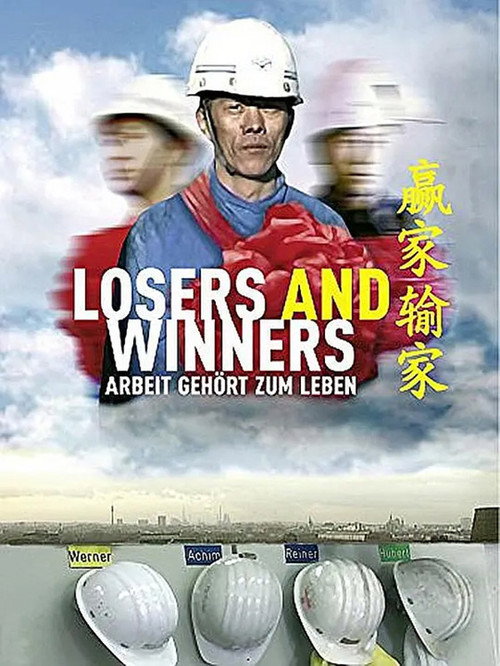
Losers and Winners 2007
In Losers and Winners (2007), directors Ulrike Franke and Michael Loeken craft a gripping documentary that captures the emotional and industrial upheaval following the sudden closure of the Kaiserstuhl coking plant in Dortmund.
Director: Michael Loeken
Frequently Asked Questions
What is Losers and Winners (2007) about?
Losers and Winners follows the dismantling of a once-thriving coking plant in Dortmund, Germany, after its abrupt closure. The film documents how 400 Chinese workers are brought in to disassemble the plant, forcing former employees to assist in dismantling their own workplace. It's a raw exploration of change, globalization, and the emotional toll of industrial decline.
Who directed Losers and Winners?
Losers and Winners was co-directed by Ulrike Franke and Michael Loeken, who spent over a year and a half documenting the plant's dismantling and the stories of those affected.
Who stars in Losers and Winners?
The film features the real-life workers and employees of the Kaiserstuhl coking plant, whose personal stories and experiences form the heart of the documentary.
Is Losers and Winners (2007) worth watching?
As a documentary, Losers and Winners offers a unique and thought-provoking perspective on globalization and industrial transition. Its observational style and emotional depth make it compelling for fans of social documentaries, even without a traditional narrative or stars.
How long is Losers and Winners?
Runtime details are not listed.
About Losers and Winners (2007) — A documentary on industrial decline and human resilience
In Losers and Winners (2007), directors Ulrike Franke and Michael Loeken craft a gripping documentary that captures the emotional and industrial upheaval following the sudden closure of the Kaiserstuhl coking plant in Dortmund. Within just eight years of operation, this hypermodern facility—once a symbol of West German technological prowess costing DM 1.3 billion—was dismantled by 400 Chinese workers, who meticulously disassembled and shipped it back to China. The film follows the plant's former cokers as they assist in dismantling their own workplace, turning former employees into reluctant guides for a workforce they might have once considered competitors.
This poignant exploration of transition and loss unfolds against the backdrop of Germany's industrial decline, offering a microcosm of globalization's impact on local communities. With quiet intensity and observational depth, the directors weave together stories of personal and collective identity, as the workers grapple with displacement and the fading of an era. The documentary's atmosphere is one of melancholy and resilience, mirroring the stark contrast between progress and nostalgia.