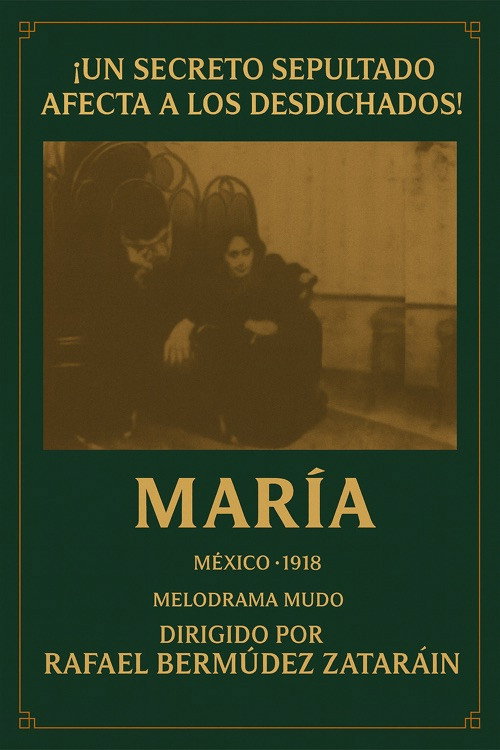
María 1918
Step into the dramatic world of *María (1918)*, a pioneering silent film that marked the first cinematic adaptation of Jorge Isaacs' classic novel.
Director: Rafael Bermúdez Zataraín
Frequently Asked Questions
What is María (1918) about?
María (1918) tells the tragic love story of María and Efraín, set against the backdrop of 19th-century Colombia. Inspired by Jorge Isaacs' novel, the film explores themes of youthful passion, separation, and fate, all while capturing the beauty and sorrow of a bygone era.
Who directed María?
María was directed by Rafael Bermúdez Zataraín, a pioneering figure in early Mexican cinema whose work helped shape the country's filmmaking traditions.
Who stars in María?
Cast details for María (1918) are not documented, leaving the identities of its actors a mystery.
Is María (1918) worth watching?
Though no longer available to view, María (1918) holds historical significance as the first film adaptation of a beloved novel. Its themes of romantic tragedy and its place in silent-era cinema make it a fascinating subject for film historians and classic literature fans.
How long is María?
Runtime details for María (1918) are not listed.
About María (1918) — First Silent Film Adaptation of Jorge Isaacs' Classic Novel
Step into the dramatic world of *María (1918)*, a pioneering silent film that marked the first cinematic adaptation of Jorge Isaacs' classic novel. Directed by Rafael Bermúdez Zataraín, this lost Mexican romance-drama captures the essence of 19th-century Colombia as it follows the tragic love story between María and Efraín. Set against lush landscapes and tinged with melancholy, the film weaves themes of forbidden love, heartbreak, and longing, transporting viewers to an era of poetic yearning. Though no longer extant, *María (1918)* remains a landmark in early Latin American cinema, blending literary tradition with the magic of silent storytelling.
While the original footage is believed to be missing, the film's legacy endures as a testament to the power of silent cinema. Its adaptation of Isaacs' novel—a tale of youthful romance derailed by fate—resonates with audiences who appreciate timeless, emotionally charged narratives. Though details about the cast remain scarce, *María (1918)* stands as a silent-era treasure, offering a glimpse into the cultural and cinematic landscape of its time. For lovers of classic literature and early film history, this lost masterpiece remains a poignant footnote in the evolution of storytelling.