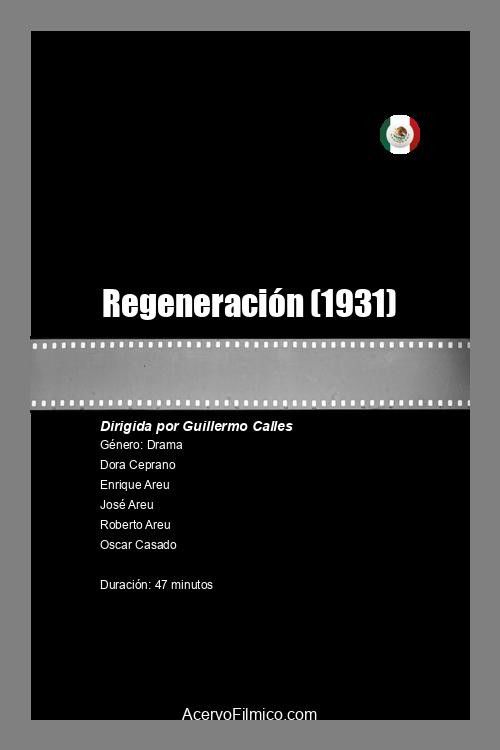
Regeneration 1931
Regeneration (1931) emerges as a compelling early sound drama that captures the artistic evolution of Spanish cinema during the formative years of filmmaking.
Director: Guillermo Calles
Cast
Frequently Asked Questions
What is Regeneration (1931) about?
Regeneration follows a dramatic narrative centered on themes of renewal, personal transformation, and human resilience, presented through intimate character relationships and emotional depth typical of early 1930s filmmaking.
Who directed Regeneration?
Guillermo Calles directed this 1931 drama, bringing his vision to a film that represents an important moment in Spanish cinema's transition to sound.
Who stars in Regeneration?
The film features Dora Ceprano alongside Enrique Areu, José Areu, and Roberto Areu, with additional performances from Oscar Casado and Juan Aristi Eulate.
Is Regeneration (1931) worth watching?
At 47 minutes, this unrated drama offers a concise glimpse into early Spanish sound cinema and its thematic concerns with regeneration and human transformation, making it valuable for film historians and enthusiasts of 1930s dramas.
How long is Regeneration?
Regeneration runs for 47 minutes, making it a concise dramatic feature from the early sound era.
Regeneration (1931): Early Sound Drama of Renewal — Cast and Full Movie Info
Regeneration (1931) emerges as a compelling early sound drama that captures the artistic evolution of Spanish cinema during the formative years of filmmaking. Directed by Guillermo Calles, this 47-minute feature presents a focused narrative that explores themes of renewal and personal transformation, hallmarks of the dramatic tradition that would define much of the decade's storytelling.
The film showcases performances from Dora Ceprano alongside the talented Areu family trio—Enrique, José, and Roberto—whose collaborative presence adds depth to the intimate character study. With additional contributions from Oscar Casado and Juan Aristi Eulate, the ensemble creates a textured portrait of human struggle and resilience. As a work from 1931, Regeneration offers valuable insight into the transition period between silent and sound cinema, representing the creative spirit of its era through its dramatic exploration of rebirth and change.