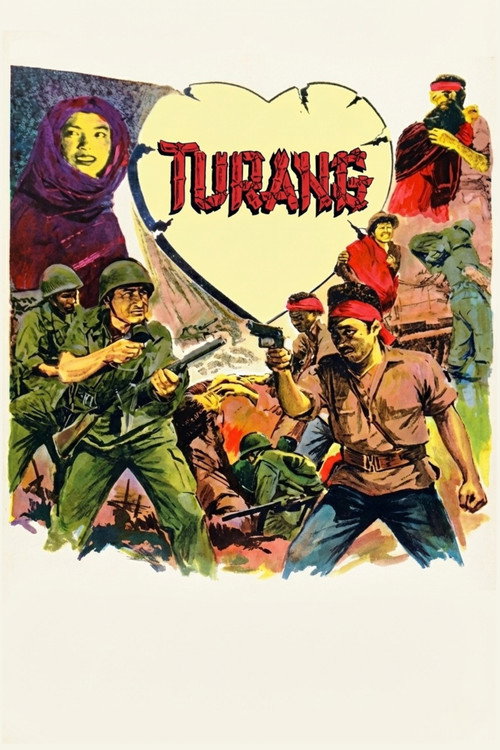
Turang 1958
Directed by Bachtiar Siagian, *Turang (1958)* immerses viewers in the raw intensity of Indonesia's war of independence, set against the rugged backdrop of Tanah Karo.
Director: Bachtiar Siagian
Cast



Frequently Asked Questions
What is Turang (1958) about?
*Turang* follows the guerrilla resistance in Tanah Karo during Indonesia's fight for independence, where wounded rebel leader Rusli is nursed back to health by Tipi. Their growing bond is tested as Dutch forces, backed by a traitor, launch relentless attacks, forcing the fighters to adapt and keep moving.
Who directed Turang?
Turang was directed by Bachtiar Siagian, a filmmaker known for his socially conscious and politically charged cinema.
Who stars in Turang?
The film stars Nizmah Zaglulsyah as Tipi, Omar Bach as deputy commander Rusli, and features Hadisjam Tahax, Tuahta Perangin-angin, and Ahmadi Hamid in key roles.
Is Turang (1958) worth watching?
While lacking an IMDb rating, *Turang* offers a rare glimpse into Indonesia's struggle for independence through its authentic drama. Fans of historical films or politically themed cinema will appreciate its emotional depth and unflinching portrayal of resistance.
How long is Turang?
The runtime of *Turang* is 94 minutes.
About Turang (1958) — Indonesia's War of Independence on Film
Directed by Bachtiar Siagian, *Turang (1958)* immerses viewers in the raw intensity of Indonesia's war of independence, set against the rugged backdrop of Tanah Karo. The film follows the guerrilla resistance led from Seberaja, a village serving as a strategic command post, where wounded deputy commander Rusli finds refuge with Tipi. As Dutch forces launch brutal attacks, aided by a treacherous collaborator, love blossoms amidst the chaos of war, blending personal passion with the unyielding spirit of a nation fighting for freedom.
With its gritty realism and emotional depth, *Turang* captures the resilience of ordinary people thrust into extraordinary circumstances. Siagian's direction infuses the narrative with a sense of urgency and authenticity, while the central romance between Rusli and Tipi humanizes the larger struggle. The film's themes of sacrifice, betrayal, and defiance resonate through its stark portrayal of survival in the face of oppression, making it a compelling exploration of Indonesia's fight for sovereignty.