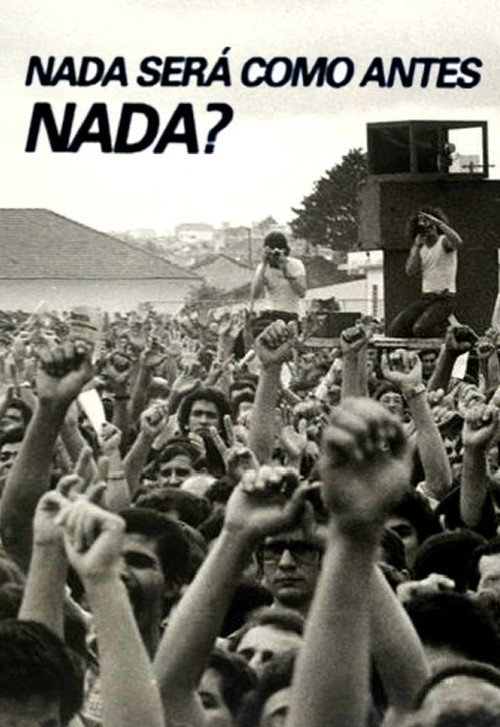
Nada Será como Antes, Nada? 1984
Dive into *Nada Será como Antes, Nada?* (1984), Renato Tapajós' gripping documentary that dissects the complex interplay between leftist ideologies and the fight for democracy during a pivotal era.
Director: Renato Tapajós
Frequently Asked Questions
What is *Nada Será como Antes, Nada?* (1984) about?
Renato Tapajós' documentary explores the left's evolving relationship with democracy and grassroots movements in Brazil. It juxtaposes political theory with the gritty reality of militant cinema, questioning how art can fuel—or complicate—social struggles.
Who directed *Nada Será como Antes, Nada??*
Director information is not available.
Who stars in *Nada Será como Antes, Nada??*
Cast details are not listed.
Is *Nada Será como Antes, Nada?* (1984) worth watching?
As a 43-minute documentary steeped in political urgency, *Nada Será como Antes, Nada?* offers a fascinating glimpse into Brazil's activist history. While not widely rated on IMDb, its themes of democracy and resistance make it a compelling watch for fans of thought-provoking cinema.
How long is *Nada Será como Antes, Nada??*
Runtime details are not listed.
About Nada Será como Antes, Nada? (1984) — Leftist Cinema's Bold Exam of Democracy and Activism
Dive into *Nada Será como Antes, Nada?* (1984), Renato Tapajós' gripping documentary that dissects the complex interplay between leftist ideologies and the fight for democracy during a pivotal era. The film doesn't just observe political movements—it immerses viewers in the raw energy of grassroots activism while questioning the power of militant cinema. Through a lens both poetic and unflinching, Tapajós bridges the gap between art and activism, asking whether film can truly reflect or reshape real-world struggles. The atmosphere is charged with urgency, blending archival footage with candid discussions that feel as relevant today as they did four decades ago.
A cornerstone of Brazil's political cinema, this 43-minute documentary challenges its audience to confront uncomfortable truths about democracy, resistance, and the role of the artist as a provocateur. With its sharp focus on popular movements, *Nada Será como Antes, Nada?* doesn't just document history—it demands participation. The result is a work that lingers long after the credits roll, leaving viewers to ponder the enduring tension between idealism and reality.