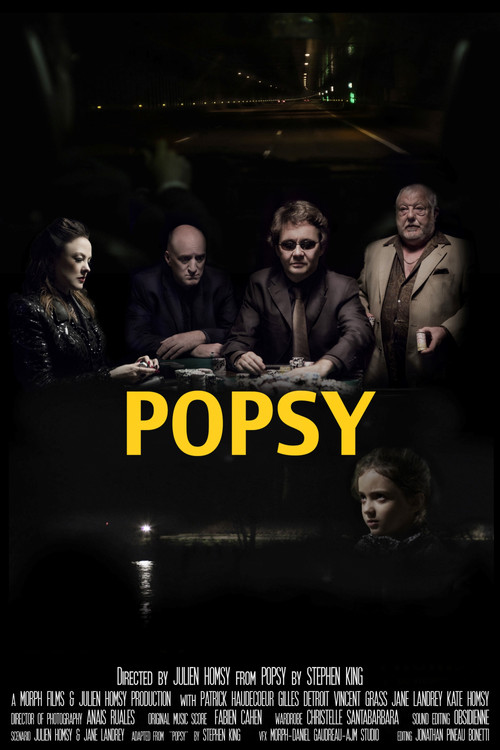
Popsy 2016
Popsy (2016) delivers a chilling twist on Stephen King's unsettling tale, blending fantasy and horror into a tight 18-minute narrative. Directed by Julien Lomessy, the film follows Weber, a desperate man whose poker addiction spirals into a nightmarish debt with the enigmatic Mr.
Director: Julien Lomessy
Cast



Frequently Asked Questions
What is Popsy (2016) about?
Popsy (2016) follows Weber, a compulsive gambler who finds himself in over his head after racking up a crippling debt to a mysterious figure named Mr. Rudy. His attempts to escape the consequences only draw him deeper into a supernatural trap, where his choices unravel in increasingly terrifying ways.
Who directed Popsy?
Popsy (2016) was directed by Julien Lomessy, a filmmaker known for crafting concise, atmospheric horror stories.
Who stars in Popsy?
The film stars Patrick Haudecœur, Kate Homsy, Vincent Grass, Jane Landrey, and Gilles Détroit in pivotal roles.
Is Popsy (2016) worth watching?
Though brief, Popsy (2016) packs a punch with its Stephen King adaptation and moody horror-fantasy blend. Its tight runtime and eerie premise make it a solid pick for genre fans, even if it's more of a cult curiosity than a mainstream hit.
How long is Popsy?
Popsy (2016) runs for 18 minutes.
Popsy (2016): Stephen King's Dark Poker Tale — Full Movie Info
Popsy (2016) delivers a chilling twist on Stephen King's unsettling tale, blending fantasy and horror into a tight 18-minute narrative. Directed by Julien Lomessy, the film follows Weber, a desperate man whose poker addiction spirals into a nightmarish debt with the enigmatic Mr. Rudy. As Weber's choices narrow, the story plunges into a surreal confrontation with forces beyond his control, where greed and consequence collide in the most unexpected way.
Atmospherically shot and sharply paced, Popsy (2016) lingers like a dark fable, weaving themes of addiction, fate, and the eerie price of borrowing from the unknown. With a cast led by Patrick Haudecœur and Kate Homsy, the film balances tension and dread, leaving audiences questioning reality long after the credits roll.