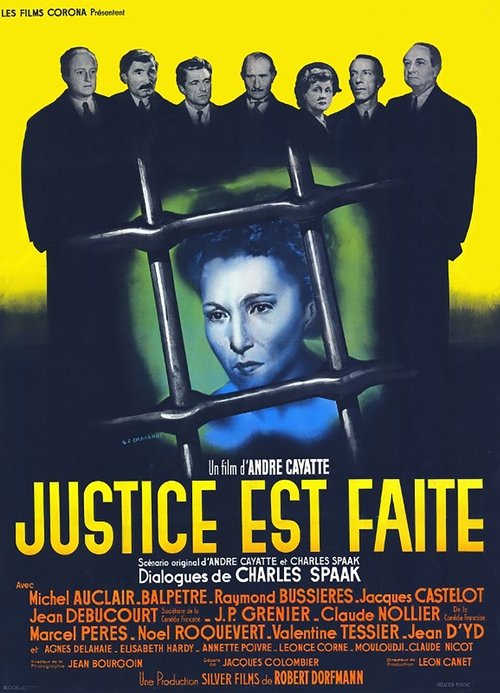
Justice Is Done 1950
Justice Is Done (1950), directed by the provocative André Cayatte, plunges viewers into the tense deliberations of a jury grappling with a morally complex murder case.
Director: André Cayatte
Cast
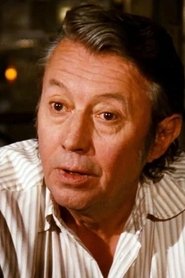
Michel Auclair
Serge Cremer
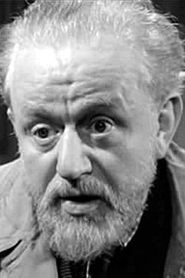
Antoine Balpêtré
President of the tribunal
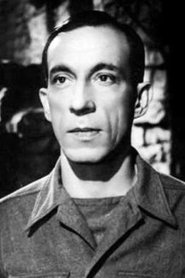
Raymond Bussières
Félix Noblet, 5th juror
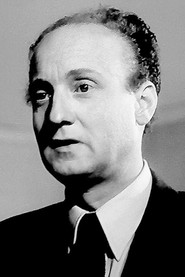
Jacques Castelot
Gilbert de Montesson, first juror
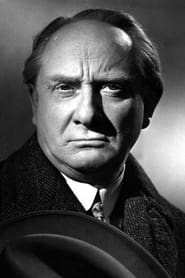
Jean Debucourt
Michel Caudron, 7th juror
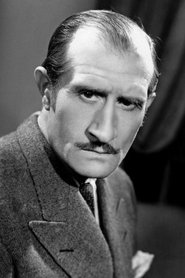
Noël Roquevert
Théodore Andrieux, retired commander, juror
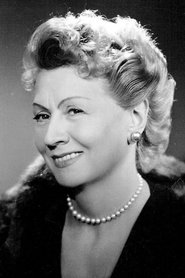
Valentine Tessier
Marceline Micoulin, antique dealer, juror
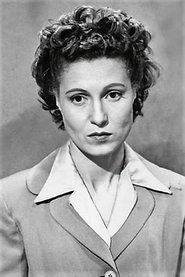
Claude Nollier
Elsa Lundenstein, pharmaceutical director, the accused
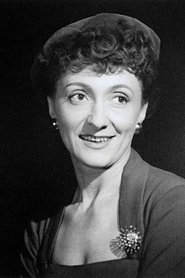
Annette Poivre
Lulu, Felix's fiancée

Dita Parlo
Elisabeth
Frequently Asked Questions
What is Justice Is Done (1950) about?
Justice Is Done (1950) follows a jury as they deliberate the case of Elsa Lundenstein, accused of murdering her lover. Each juror brings their own biases to the deliberation table, leading to conflicting interpretations of the evidence and raising questions about the subjectivity of justice.
Who directed Justice Is Done?
Justice Is Done was directed by André Cayatte, a filmmaker known for his socially conscious dramas and legal-themed narratives that challenge perceptions of morality and law.
Who stars in Justice Is Done?
The film features Michel Auclair, Antoine Balpêtré, Raymond Bussières, Jacques Castelot, and Jean Debucourt in pivotal roles.
Is Justice Is Done (1950) worth watching?
Justice Is Done (1950) is a compelling watch for fans of courtroom dramas and psychological thrillers. While it lacks an IMDb rating, its thematic depth and André Cayatte's direction make it a thought-provoking film that lingers long after the credits roll.
How long is Justice Is Done?
Justice Is Done runs for 105 minutes.
Justice Is Done (1950): A Jury's Moral Dilemma — Full Movie Info
Justice Is Done (1950), directed by the provocative André Cayatte, plunges viewers into the tense deliberations of a jury grappling with a morally complex murder case. As the panel dissects the evidence surrounding Elsa Lundenstein's alleged killing of her lover, personal biases and hidden prejudices begin to shape their interpretations of the facts. Cayatte crafts a gripping courtroom drama where every testimony, every silence, and every raised eyebrow carries weight, revealing how justice is not just decided in the law books but in the hearts and experiences of those tasked with delivering it.
This French courtroom mystery thrives on psychological depth and dramatic tension, blending legal realism with human fallibility. With shades of film noir and social commentary, the film asks uncomfortable questions about guilt, intention, and the fragile line between vengeance and justice. Set against the backdrop of mid-century France, Justice Is Done (1950) lingers as a haunting exploration of morality, where the truth is never as clear-cut as the jury—or the audience—might hope.