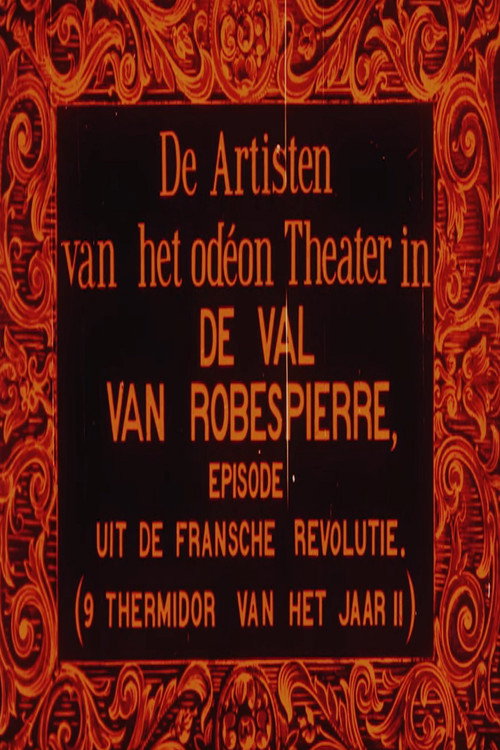
The End of Robespierre 1912
Dive into the turbulent final days of Maximilien Robespierre in Albert Capellani's *The End of Robespierre (1912)*, a gripping historical drama that captures the raw intensity of the French Revolution.
Director: Albert Capellani
Cast

Frequently Asked Questions
What is The End of Robespierre (1912) about?
This short drama traces the final chapter in the life of Maximilien Robespierre, the radical leader whose reign during the French Revolution became synonymous with terror and instability. Through a lens focused on personal drama rather than spectacle, the film explores the psychological unraveling of a man whose ideals led to his downfall.
Who directed The End of Robespierre?
The film was directed by Albert Capellani, a pioneer of early French cinema known for adapting historical and literary works with striking visual storytelling.
Who stars in The End of Robespierre?
The cast features Georges Saillard as Maximilien Robespierre, supported by Jacques Grétillat, Charles De Rochefort, and Georges Dorival in pivotal roles that enrich the film's historical texture.
Is The End of Robespierre (1912) worth watching?
While its acting style reflects early cinema conventions, *The End of Robespierre* stands out for its historical fidelity and atmospheric intensity. As a silent-era drama, it offers a unique lens on Revolutionary France—ideal for history buffs and fans of vintage cinema seeking a concise yet powerful narrative. Its runtime makes it a perfect introduction to the genre.
How long is The End of Robespierre?
The film runs for 13 minutes.
About The End of Robespierre (1912) — A Gritty Silent Film on the French Revolution's Darkest Days
Dive into the turbulent final days of Maximilien Robespierre in Albert Capellani's *The End of Robespierre (1912)*, a gripping historical drama that captures the raw intensity of the French Revolution. This 13-minute silent film strips away theatrical exaggeration to deliver a stark portrayal of power, betrayal, and the grim realities of revolutionary France. While early 20th-century acting styles may feel restrained by modern standards, the film's historical authenticity and atmospheric tension transport viewers to an era where ideals collided with bloodshed. Georges Saillard leads the cast with commanding presence, embodying the fragile tyranny of a man who once held the fate of a nation in his hands.
Set against a backdrop of upheaval, *The End of Robespierre (1912)* thrives on its stark contrasts—between lofty revolutionary rhetoric and the brutal executions that followed. Capellani's direction frames a world where humanity's darker impulses run rampant, and morality becomes a luxury. Though a short film, its haunting visuals and thematic depth leave a lasting impression, offering a cinematic glimpse into one of history's most pivotal and violent chapters.