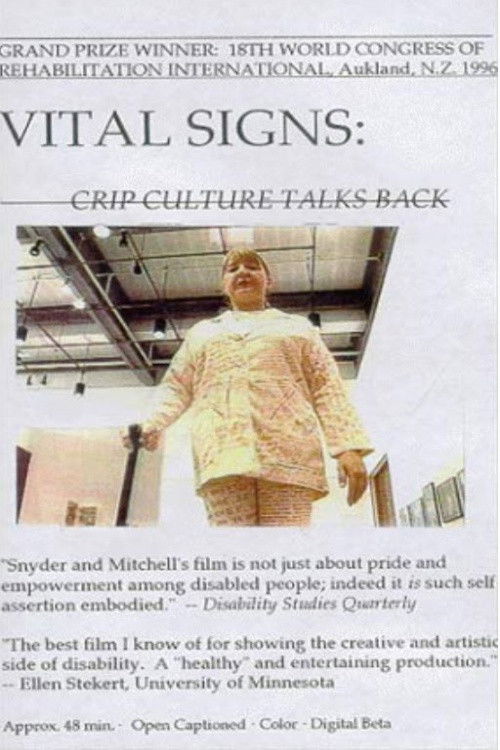
Vital Signs: Crip Culture Talks Back 1995
Dive into the raw, unfiltered world of Vital Signs: Crip Culture Talks Back (1995), a documentary that boldly explores the complexities of disability culture.
Director: David Mitchell
Cast
Frequently Asked Questions
What is Vital Signs: Crip Culture Talks Back (1995) about?
This documentary explores the complexities of disability culture through the performances, debates, and conversations of activists at a national conference on Disability & the Arts.
Who directed Vital Signs: Crip Culture Talks Back?
David Mitchell's direction brings a bold and unflinching gaze to the world of disability culture.
Who stars in Vital Signs: Crip Culture Talks Back?
The film features a talented cast, including Cheryl Marie Wade, Mary Duffy, Harlan Hahn, and others.
Is Vital Signs: Crip Culture Talks Back (1995) worth watching?
With its thought-provoking themes and unapologetic tone, Vital Signs: Crip Culture Talks Back (1995) is a must-watch for anyone interested in disability culture and its many facets. While it may not be suitable for all audiences, this documentary is a landmark film that continues to inspire and provoke audiences to this day.
How long is Vital Signs: Crip Culture Talks Back?
Vital Signs: Crip Culture Talks Back (1995) has a runtime of 48 minutes.
About Vital Signs: Crip Culture Talks Back (1995) — A Landmark Documentary on Disability Culture
Dive into the raw, unfiltered world of Vital Signs: Crip Culture Talks Back (1995), a documentary that boldly explores the complexities of disability culture. Directed by David Mitchell, this thought-provoking film features powerful performances, intense debates, and candid conversations from a national conference on Disability & the Arts. With a talented cast, including Cheryl Marie Wade, Mary Duffy, and Harlan Hahn, Vital Signs conveys the intensity, diversity, and resilience of disability culture in the 1990s. Open-Captioned and featuring strong language and nudity, this film is not for the faint of heart. By shedding light on the often-overlooked experiences of people with disabilities, Vital Signs: Crip Culture Talks Back (1995) challenges its viewers to reexamine their perspectives and foster a deeper understanding of the world around them.
As the camera captures the unbridled energy of the conference, the audience is treated to a glimpse into the vibrant, dynamic culture of people with disabilities. From the passionate speeches to the heartfelt discussions, Vital Signs: Crip Culture Talks Back (1995) is a testament to the power of community and the unrelenting spirit of those who refuse to be silenced. If you're ready to confront the complexities of disability culture and emerge with a newfound appreciation for the resilience of the human spirit, then Vital Signs: Crip Culture Talks Back (1995) is the documentary for you.
With its unflinching gaze and unapologetic tone, Vital Signs: Crip Culture Talks Back (1995) is a landmark film that continues to inspire and provoke audiences to this day. By exploring the intersections of art, politics, and identity, this documentary has become a touchstone for anyone interested in disability culture and its many facets.